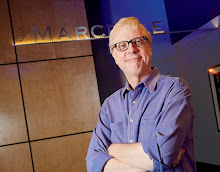
We ran Act II for the first time last night. I've done the show twice before, but I really had forgotten (or maybe never really noticed) how lean this writing is. There's not an extra word in there -- every moment reveals this subculture or it moves plot or character forward.
As I watched some of the scenes tonight, as I played for Lainie singing "Worse Things" and Beth singing the "Sandra Dee" reprise, I kept thinking to myself, Goddamn! It's fun living inside of Grease, having that music in my head when I drive around, thinking about what an incredibly interesting time that was! (Not necessarily good or bad, but really damned interesting...)
I feel like this from time to time about our shows (A New Brain, Hair, Floyd Collins, The Cradle Will Rock, Passion, Bat Boy, Songs for a New World), but the feeling is stronger than usual this time. There is something so utterly joyful and innocent and primal about this material, the language, the music, the sex. There's a whole lotta Truth goin' on in this show, and I think that's what, more than anything, makes people fall d.a. over white bucks in love with it. Theatre doesn't usually tell the truth about sex, but Grease does. Sex is sloppy, awkward, humiliating, funny, ridiculous, disgusting, transcendant. Some (shallow) people mock Grease (and, more deservedly, Grease II), because they only notice the surface love story. They don't notice how lovingly and authentically the rest of the story is told, and they don't "get" the satire and cultural commentary, probably because someone once taught them (or they taught themselves) that musicals are all stupid and there's no use even looking for artistry.
For me, there's nothing in the world like finding new depth in an old classic. It gives you hope that there are even more buried treasures waiting to be reborn. (I know, I know, mixed metaphor -- So sue me. Sue me. What can you do me?)
All in all, living in Grease motherfucking rocks. Fully.
Long Live the Musical!
Scott

They're Peeing on Prom Night.
Had choreography rehearsal today -- Robin staged all the dance in the prom scene. And the "Hand Jive" choreography is so great -- it looks so spontaneous, like these kids are really at a dance, instead of just doing choreography in a musical. It really looks authentic. Very cool.
But then...
Don't ask me why, but I tuned in to that abomination on NBC again, that evil-doing reality show created to crush the spirit and destroy the memory of the real Grease! Why would I put myself through that again? Why would I torture myself with images of cynical showbizzers peeing on one of the great rock musicals? I told you not to ask me that!
So the remaining contestants (using that word about people auditioning for the theatre HURTS ME!) finished tonight's episode singing and doing choreography to "We Go Together." I suppose I should be grateful they're at least doing songs from the stage show now, instead of the disco and country songs from the movie.
But the choreography made my soul ache -- Merciful Heavens, surely that's not what this show is going to look like! These grinning Ken and Barbie dolls were flailing around like low-rent robot cheerleaders on crystal meth... (The robot cheerleader meth problem is gonna destroy America if we're not careful!) If that's what this new Grease is gonna be, just shoot me now. No, better yet, shoot the producer.
Once upon a time, Broadway was both commercial and artistic. Not anymore. Well, not much anyway... sometimes art still sneaks onto Broadway, but it's getting more and more rare...
One consolation -- our greasers could totally take their greasers in a rumble. We'd tear their matching pastel t-shirts off 'em and pound some Tough into 'em... And then we'd give them back their penises and force 'em to sing songs that are actually from the stage show, like "All Choked Up"-- now that's sexy!
Long Live the Musical!
Scott
But then...
Don't ask me why, but I tuned in to that abomination on NBC again, that evil-doing reality show created to crush the spirit and destroy the memory of the real Grease! Why would I put myself through that again? Why would I torture myself with images of cynical showbizzers peeing on one of the great rock musicals? I told you not to ask me that!
So the remaining contestants (using that word about people auditioning for the theatre HURTS ME!) finished tonight's episode singing and doing choreography to "We Go Together." I suppose I should be grateful they're at least doing songs from the stage show now, instead of the disco and country songs from the movie.
But the choreography made my soul ache -- Merciful Heavens, surely that's not what this show is going to look like! These grinning Ken and Barbie dolls were flailing around like low-rent robot cheerleaders on crystal meth... (The robot cheerleader meth problem is gonna destroy America if we're not careful!) If that's what this new Grease is gonna be, just shoot me now. No, better yet, shoot the producer.
Once upon a time, Broadway was both commercial and artistic. Not anymore. Well, not much anyway... sometimes art still sneaks onto Broadway, but it's getting more and more rare...
One consolation -- our greasers could totally take their greasers in a rumble. We'd tear their matching pastel t-shirts off 'em and pound some Tough into 'em... And then we'd give them back their penises and force 'em to sing songs that are actually from the stage show, like "All Choked Up"-- now that's sexy!
Long Live the Musical!
Scott
Goodbye to Sandra Dee
For the past six months, I've been doing so much research to prepare for Grease. Once I understood that the show's raison d'etre is Authenticity, I realized I had to learn everything I could about the real, non-Happy Days 1950s. As I wrote in my earlier posts, I've been reading about the history of rock and roll, the history of sex in America, and the history of American teenagers and their culture. I've also been accumulating excellent documentaries on drive-ins, 1950s sexuality, 50s pop culture, the car culture of the 50s, and an excellent 10-part documentary called The History of Rock and Roll.
But I've also been watching tons of movies (and a little TV) from the period -- movies like I Was a Teenage Werewolf (which is so much better than you'd think!), Imitation of Life, High School Confidential, Teenage Doll, The Wild Ride, Tammy and the Bachelor (the movie Frenchy is talking about before "Beauty School Dropout"), High School Hellcats, Bucket of Blood (a great Beat horror flick), Rock, Rock, Rock, and so many more.
And then tonight I hit the mother lode. Gidget.
And now I understand, in a way I never did before, why Sandra Dee is the central metaphor of Grease. I often wondered why Jim Jacobs and Warren Casey rested so much of the show on that one over-arching symbol. Now I know.
Sandra Dee was a big star in late 50s and early 60s, and just in the two years that Grease spans, she released The Restless Years (1958), The Reluctant Debutante (1958), A Stranger in My Arms (1959), Gidget (1959), Imitation of Life (1959), The Wild and the Innocent (1959), and A Summer Place (1959), jumping back and forth between empty-headed teen comedies and stark melodrama. Today, it might be hard to understand what Sandra Dee represented, but she was the poster girl for the big studios’ attempts to make teen movies, a form which was up until that point the exclusive territory of small, low-budget producers like the ubiquitous Roger Corman.
But the studios’ teen flicks were inevitably artificial in the extreme, creating a freakish – and clueless – adult imitation of the teen world, a kind of cultural Frankenstein, that teens could see right through. To savvy teenagers, Sandra Dee was a teen sellout, and in a world where authenticity was the goal, there was nothing worse. She was a fake – in her life, in her acting style, and in her onscreen emotions. Teen audiences didn't want that; they wanted High School Hellcats and Teenage Doll. But adults loved Sandra Dee; she reassured them that their teen was a “good girl.”
In Grease, Sandy takes Sandra Dee as a role model (as many American girls did) – but not the real Sandra Dee, the cheery public character Sandra Dee, confusing her onscreen persona with her real life. Like millions of Americans in postwar America, Sandy (and presumably her family) are trying to live an American Dream that is pure fiction, particularly for the working class. That conflict is at the heart of Sandy’s arc in Grease.
But on another level, the metaphor gets even deeper – and this demonstrates the craftsmanship of this script – because Sandy’s relationship with Danny mirrors Sandra Dee’s difficult real life relationship with Bobby Darin. As Rizzo taunts Sandy with "Look at Me, I'm Sandra Dee," she doesn't really know how dark that dark underbelly really is…
Darphne Merkin wrote in The New York Times in 2005 at the time of Sandra Dee’s death: …the “darling, pink world,” as she herself characterized it, that Sandra Dee was thought to inhabit by her fans had always been a grotesque mockery, plagued not by an overripened case of virginity but by childhood incest. The girl with brimming brown eyes and a fizzy lilt to her voice was born Alexandria Zuck in Bayonne, N.J. Her parents divorced when she was five; her father, a bus driver, disappeared from her life shortly thereafter, and her mother, Mary, married a much-older real-estate entrepreneur named Eugene Duvan within a few years. . . Worse yet, Dee's devoted but manipulative mother turned a conveniently blind eye to the defiled sexual appetites of her new husband. Duvan, who liked to tease his wife that he married her “just to get Sandy,” started having sex with his beautiful stepdaughter when she was 8 and continued doing so almost until his death when she was 12.
In fact, Sandra Dee later suffered from anorexia, depression, and alcoholism. All this made her cynically manufactured facade of sweetness even darker and more complex. This was the conventional, repressed, manufactured life from which Sandy Dumbrowksi must escape.
Merkin wrote: The thing is, [her career] happened so fast, was over practically before it began, that we can almost be forgiven for misconstruing her as a cultural simulacrum: a blip on the monitor, a media invention, an adorable incarnation of a feminine ideal of the reluctant or unwitting nymphet, rather than a flesh-and-blood creature with needs and wishes (not to mention raging demons) of her own.
Grease looks at the fifties with perfect, twenty-twenty hindsight, and it sees the darkness and deception of the decade’s role models and authority figures. Jacobs and Casey chose their central metaphor with great care. Sandra Dee wasn't happy in her real life because she was never allowed to be herself – to be authentic – and Sandy Dumbrowski suffers the same problem. Sandra Dee represents not just strict morality and virginity in Grease, but the entire manufactured, mainstream culture of 1950s America, the culture the kids of Grease are trying to escape.
Like I keep saying... the deeper I look, the more I find... and my chapter just keeps getting longer and longer..
Long Live the Musical!
Scott
But I've also been watching tons of movies (and a little TV) from the period -- movies like I Was a Teenage Werewolf (which is so much better than you'd think!), Imitation of Life, High School Confidential, Teenage Doll, The Wild Ride, Tammy and the Bachelor (the movie Frenchy is talking about before "Beauty School Dropout"), High School Hellcats, Bucket of Blood (a great Beat horror flick), Rock, Rock, Rock, and so many more.
And then tonight I hit the mother lode. Gidget.
And now I understand, in a way I never did before, why Sandra Dee is the central metaphor of Grease. I often wondered why Jim Jacobs and Warren Casey rested so much of the show on that one over-arching symbol. Now I know.
Sandra Dee was a big star in late 50s and early 60s, and just in the two years that Grease spans, she released The Restless Years (1958), The Reluctant Debutante (1958), A Stranger in My Arms (1959), Gidget (1959), Imitation of Life (1959), The Wild and the Innocent (1959), and A Summer Place (1959), jumping back and forth between empty-headed teen comedies and stark melodrama. Today, it might be hard to understand what Sandra Dee represented, but she was the poster girl for the big studios’ attempts to make teen movies, a form which was up until that point the exclusive territory of small, low-budget producers like the ubiquitous Roger Corman.
But the studios’ teen flicks were inevitably artificial in the extreme, creating a freakish – and clueless – adult imitation of the teen world, a kind of cultural Frankenstein, that teens could see right through. To savvy teenagers, Sandra Dee was a teen sellout, and in a world where authenticity was the goal, there was nothing worse. She was a fake – in her life, in her acting style, and in her onscreen emotions. Teen audiences didn't want that; they wanted High School Hellcats and Teenage Doll. But adults loved Sandra Dee; she reassured them that their teen was a “good girl.”
In Grease, Sandy takes Sandra Dee as a role model (as many American girls did) – but not the real Sandra Dee, the cheery public character Sandra Dee, confusing her onscreen persona with her real life. Like millions of Americans in postwar America, Sandy (and presumably her family) are trying to live an American Dream that is pure fiction, particularly for the working class. That conflict is at the heart of Sandy’s arc in Grease.
But on another level, the metaphor gets even deeper – and this demonstrates the craftsmanship of this script – because Sandy’s relationship with Danny mirrors Sandra Dee’s difficult real life relationship with Bobby Darin. As Rizzo taunts Sandy with "Look at Me, I'm Sandra Dee," she doesn't really know how dark that dark underbelly really is…
Darphne Merkin wrote in The New York Times in 2005 at the time of Sandra Dee’s death: …the “darling, pink world,” as she herself characterized it, that Sandra Dee was thought to inhabit by her fans had always been a grotesque mockery, plagued not by an overripened case of virginity but by childhood incest. The girl with brimming brown eyes and a fizzy lilt to her voice was born Alexandria Zuck in Bayonne, N.J. Her parents divorced when she was five; her father, a bus driver, disappeared from her life shortly thereafter, and her mother, Mary, married a much-older real-estate entrepreneur named Eugene Duvan within a few years. . . Worse yet, Dee's devoted but manipulative mother turned a conveniently blind eye to the defiled sexual appetites of her new husband. Duvan, who liked to tease his wife that he married her “just to get Sandy,” started having sex with his beautiful stepdaughter when she was 8 and continued doing so almost until his death when she was 12.
In fact, Sandra Dee later suffered from anorexia, depression, and alcoholism. All this made her cynically manufactured facade of sweetness even darker and more complex. This was the conventional, repressed, manufactured life from which Sandy Dumbrowksi must escape.
Merkin wrote: The thing is, [her career] happened so fast, was over practically before it began, that we can almost be forgiven for misconstruing her as a cultural simulacrum: a blip on the monitor, a media invention, an adorable incarnation of a feminine ideal of the reluctant or unwitting nymphet, rather than a flesh-and-blood creature with needs and wishes (not to mention raging demons) of her own.
Grease looks at the fifties with perfect, twenty-twenty hindsight, and it sees the darkness and deception of the decade’s role models and authority figures. Jacobs and Casey chose their central metaphor with great care. Sandra Dee wasn't happy in her real life because she was never allowed to be herself – to be authentic – and Sandy Dumbrowski suffers the same problem. Sandra Dee represents not just strict morality and virginity in Grease, but the entire manufactured, mainstream culture of 1950s America, the culture the kids of Grease are trying to escape.
Like I keep saying... the deeper I look, the more I find... and my chapter just keeps getting longer and longer..
Long Live the Musical!
Scott
Those Magic Changes
Thinking about the alchemy of theatre, the way we all come together on each show, all bringing different gifts, everyone meeting in the middle and agreeing on the road to take and what to pack...
And I'm thinking about this amazing process (it's like watching a child) of a show learning to talk, learning to walk, finding its footing, finding its confidence, and growing to maturity, and then on closing night, passing on into the ether. It struck me tonight at rehearsal how wonderful and interesting and complex the process of making theatre is. I could see so clearly that we are standing in the exact center of our journey, so much accomplishment behind, so much potential ahead. I see what we've already conquered -- the themes, the tone, the pacing, the basic outlines of character, the darkness and, lest we forget, the Fun. I see what we're in the midst of conquering -- the score, memorizing the script, the more subtle nuances of character and relationship.
And I see what we will conquer -- those hundreds of little truthful details that make a show live, the inner life of the show itself, that spark that makes a great show a living organism, that connects the cast in a way non-performers can never imagine. And though I used to sweat and fret a lot, somehow I know with this show (and the last several) that we're really on the right road, our destination is straight ahead, and all we have to do is keep pedaling like hell.
It's a weird thing we do, making theatre. But I believe it matters. I believe theatre is one of very few places left in the world where we agree to meet, and think and talk about the things that matter most to us -- sex, love, power, freedom, art. I believe the theatre is sacred as any church because I believe art is how you touch God.
Yes, even when you're producing Grease. This is a show that celebrates the deepest, most fundamental aspects of humanity -- sex, love, and art (i.e. rock and roll). And I know that God loves rock and roll!
It's really fun to travel this road, especially with so many cool people on my journey with me, and such a joy because I know at the end of the road there are twelve amazing parties with hundreds of our closest friends. Fuckin' A!
I'll stop now. I hope you'll forgive my overabundance of metaphor, but I'm high as a fucking kite.
Long Live the Musical!
Scott
And I'm thinking about this amazing process (it's like watching a child) of a show learning to talk, learning to walk, finding its footing, finding its confidence, and growing to maturity, and then on closing night, passing on into the ether. It struck me tonight at rehearsal how wonderful and interesting and complex the process of making theatre is. I could see so clearly that we are standing in the exact center of our journey, so much accomplishment behind, so much potential ahead. I see what we've already conquered -- the themes, the tone, the pacing, the basic outlines of character, the darkness and, lest we forget, the Fun. I see what we're in the midst of conquering -- the score, memorizing the script, the more subtle nuances of character and relationship.
And I see what we will conquer -- those hundreds of little truthful details that make a show live, the inner life of the show itself, that spark that makes a great show a living organism, that connects the cast in a way non-performers can never imagine. And though I used to sweat and fret a lot, somehow I know with this show (and the last several) that we're really on the right road, our destination is straight ahead, and all we have to do is keep pedaling like hell.
It's a weird thing we do, making theatre. But I believe it matters. I believe theatre is one of very few places left in the world where we agree to meet, and think and talk about the things that matter most to us -- sex, love, power, freedom, art. I believe the theatre is sacred as any church because I believe art is how you touch God.
Yes, even when you're producing Grease. This is a show that celebrates the deepest, most fundamental aspects of humanity -- sex, love, and art (i.e. rock and roll). And I know that God loves rock and roll!
It's really fun to travel this road, especially with so many cool people on my journey with me, and such a joy because I know at the end of the road there are twelve amazing parties with hundreds of our closest friends. Fuckin' A!
I'll stop now. I hope you'll forgive my overabundance of metaphor, but I'm high as a fucking kite.
Long Live the Musical!
Scott
That's the Way It Should Be!
Rehearsals couldn't be going better. This is one of the most enthusiastic, adventurous casts I've ever worked with -- never the slightest hesitation, whatever I ask them for, they give it a shot. I ask for deeper, they go deeper. I ask for more real, they get realer. And we're all having such fun along the way.
What a weird profession we're in. Spending tens of thousands of dollars playing make-believe, while others pay to watch. But I'm damn happy to be here. And I hope we always give those others something of value for their money.
We ran through the first act last night, and I saw the first glimpse of what this show is going to be -- definitely not the Grease most people know -- but something really interesting and funny and truthful. I can see in our rehearsals, even in this early form, the Grease that I've been reading about, the Grease that first opened on Broadway and took America by surprise and storm. As much as I love the film, the show is something completely Other, as different from its movie version as Rocky Horror and Hair are from theirs. For the first time, I'm seeing a Grease in which these kids seem like real kids, like the kids Skip grew up with, the kids my brothers and I grew up with. These are flesh-and-blood people, complicated, damaged, adventurous young people discovering their sexuality and their power for the first time. I now see that this Grease, this radical, back-to-the-roots Grease, stands equal to the best and smartest of the concept musicals -- Assassins, Company, Hair, Cabaret, Man of La Mancha, The Cradle Will Rock, Songs for a New World. This is a piece of art.
After our run-through, we had a long talk about this community, these families, this school. Rydell is the kind of high school most of us were thankfully spared. It is a tough school, where survival is paramount. This is not the Rydell High in the movie. (The whole joke of naming the school after the disturbingly bland 50s pop idol Bobby Rydell is that the kids in Grease would absolutely hate Bobby Rydell and his music!) I asked all the actors to develop full character names and interesting, interconnected backstories -- that always makes such a difference for ensemble shows. Even though the audience never knows about most of the backstory, it gives the show real life, it gives the world of the play weight and history and consequence.
So this morning, Scott Tripp (Doody) created an extensive and fascinating backstory, which he posted on his Grease blog. It's really worth a read...
So all in all, things are great. The cast is working hard and having a blast, the choreography is so exactly right on target in every way, and everybody seems to be on board with my approach. I know now that, like our recent production of Jesus Christ Superstar, some people are going to HATE that our Grease will be so different from what they're used to. But I hope there are also lots of people who are delighted to see new depth in this classic show. I honestly think audiences are going to be so charmed and so entertained by this cast that they will embrace them from the first song till the finale. I really do.
Long Live the Musical!
Scott
What a weird profession we're in. Spending tens of thousands of dollars playing make-believe, while others pay to watch. But I'm damn happy to be here. And I hope we always give those others something of value for their money.
We ran through the first act last night, and I saw the first glimpse of what this show is going to be -- definitely not the Grease most people know -- but something really interesting and funny and truthful. I can see in our rehearsals, even in this early form, the Grease that I've been reading about, the Grease that first opened on Broadway and took America by surprise and storm. As much as I love the film, the show is something completely Other, as different from its movie version as Rocky Horror and Hair are from theirs. For the first time, I'm seeing a Grease in which these kids seem like real kids, like the kids Skip grew up with, the kids my brothers and I grew up with. These are flesh-and-blood people, complicated, damaged, adventurous young people discovering their sexuality and their power for the first time. I now see that this Grease, this radical, back-to-the-roots Grease, stands equal to the best and smartest of the concept musicals -- Assassins, Company, Hair, Cabaret, Man of La Mancha, The Cradle Will Rock, Songs for a New World. This is a piece of art.
After our run-through, we had a long talk about this community, these families, this school. Rydell is the kind of high school most of us were thankfully spared. It is a tough school, where survival is paramount. This is not the Rydell High in the movie. (The whole joke of naming the school after the disturbingly bland 50s pop idol Bobby Rydell is that the kids in Grease would absolutely hate Bobby Rydell and his music!) I asked all the actors to develop full character names and interesting, interconnected backstories -- that always makes such a difference for ensemble shows. Even though the audience never knows about most of the backstory, it gives the show real life, it gives the world of the play weight and history and consequence.
So this morning, Scott Tripp (Doody) created an extensive and fascinating backstory, which he posted on his Grease blog. It's really worth a read...
So all in all, things are great. The cast is working hard and having a blast, the choreography is so exactly right on target in every way, and everybody seems to be on board with my approach. I know now that, like our recent production of Jesus Christ Superstar, some people are going to HATE that our Grease will be so different from what they're used to. But I hope there are also lots of people who are delighted to see new depth in this classic show. I honestly think audiences are going to be so charmed and so entertained by this cast that they will embrace them from the first song till the finale. I really do.
Long Live the Musical!
Scott
Burning Up the Quarter Mile
I'd like to give a public retro shout-out to Frank "Skip" Berger (of the infamous Murphy Flats Racing Association), now semi-respectable dad to our choreographing dynamo Robin. Skip graduated high school in 1959 and was every bit the drag-racing, Steak'n'Shake-cruising, cop-eluding greaser back in the day (and damn proud of it!). So I sat down with him a couple weeks back so I could get a real feel for the culture of Grease. What I love most about Skip is he's not one of those weenie-ass adults who's embarrassed by his youthful adventures -- he embraces them...!
(If you ever run into him, ask him to tell you about the mud fight... And that chick they called Joystick... I wonder why she was called that... )
Skip has been the best research source in the world for me, to hear his stories (which are Really Fucking Funny), to ask him about the clothes, the cars, the girls, the cops, the all-round juvenile delinquency that Grease chronicles so lovingly. And not only are his stories Really Fucking Funny, but they also speak volumes about that time. Skip gave me such insights into the times and the minds of these kids like none of my books and documentaries ever could (luckily he's just as smart and insightful and self-knowing as he is funny).
It was a real revelation for me that the motivation behind almost all the mischief they perpetrated was really very simple -- it was all about doing anything, anything, to Drive Adults Crazy. But that's not just some over-simplifying joke -- that really was the sole motivation for many of those kids. That's something I don't think most of us who didn't live through that time really understand. There was an innocence about it all that we just don't get anymore. They weren't trying to kill anyone, hurt anyone, do any major damage (although some kids did get hurt and even killed while drag racing). Gangs then weren't like gangs now. Most of them were just in search of Adventure, Anarchy, and maybe a little Ass, and the cops knew this, and they all had a kind of understanding...
Anyway, so Skip and the Murphy Flats Boys are coming to see Grease -- I hope they don't totally hate musicals... but who could hate Grease, at least, when it's done right...? Believe it or don't, but I'm finding that a lot of people do hate Grease, although I think they hate bad, stupid productions, not the show itself. Hopefully, Skip and the Boys will appreciate our sincere attempt at Greaser Authenticity -- we often find that New Line tends to produce Musicals for People Who Hate Musicals, so maybe our Grease will win them over. Skip says he can't be held responsible for his guys when they come to the theatre -- I told him it's a rowdy show, so a rowdy audience now and then might be fun... Famous last words...
Big Thanks, Skip. You fuckin' rock, man.
Long Live the Musical!
Scott
(If you ever run into him, ask him to tell you about the mud fight... And that chick they called Joystick... I wonder why she was called that... )
Skip has been the best research source in the world for me, to hear his stories (which are Really Fucking Funny), to ask him about the clothes, the cars, the girls, the cops, the all-round juvenile delinquency that Grease chronicles so lovingly. And not only are his stories Really Fucking Funny, but they also speak volumes about that time. Skip gave me such insights into the times and the minds of these kids like none of my books and documentaries ever could (luckily he's just as smart and insightful and self-knowing as he is funny).
It was a real revelation for me that the motivation behind almost all the mischief they perpetrated was really very simple -- it was all about doing anything, anything, to Drive Adults Crazy. But that's not just some over-simplifying joke -- that really was the sole motivation for many of those kids. That's something I don't think most of us who didn't live through that time really understand. There was an innocence about it all that we just don't get anymore. They weren't trying to kill anyone, hurt anyone, do any major damage (although some kids did get hurt and even killed while drag racing). Gangs then weren't like gangs now. Most of them were just in search of Adventure, Anarchy, and maybe a little Ass, and the cops knew this, and they all had a kind of understanding...
Anyway, so Skip and the Murphy Flats Boys are coming to see Grease -- I hope they don't totally hate musicals... but who could hate Grease, at least, when it's done right...? Believe it or don't, but I'm finding that a lot of people do hate Grease, although I think they hate bad, stupid productions, not the show itself. Hopefully, Skip and the Boys will appreciate our sincere attempt at Greaser Authenticity -- we often find that New Line tends to produce Musicals for People Who Hate Musicals, so maybe our Grease will win them over. Skip says he can't be held responsible for his guys when they come to the theatre -- I told him it's a rowdy show, so a rowdy audience now and then might be fun... Famous last words...
Big Thanks, Skip. You fuckin' rock, man.
Long Live the Musical!
Scott
Sock Hop Baby, Roll Up Your Crazy Jeans!
Shake, rock, and roll! We started staging the show last night, and once again I have set us down a weird, wild road. The more I read about the original production of Grease, the more I see how much the creators wanted it to feel real. But because we've all spent our lives (or most of our lives) with the silly, cartoony Grease movie as our only point of reference, we're really having to consciously and with great effort put everything we know about the show aside and come at it entirely fresh. And that's not easy -- especially for me, who's seen the movie more than 60 times!
Yes, I am a bit of a freak. A bit? Shut up!
We spent some time at the beginning of the rehearsal last night trying to put away the cartoons and come at these characters the same way we would if we were doing Death of a Salesman or American Buffalo. The more we succeeded at that, the edgier the dialogue got, the more subtext emerged, the more surprises we found. I know you'll think I'm retarded or high when I say this, but there is a lot of depth in this script that nearly everyone ignores. And I'm not high.
Right now...
As we take this new/original approach, so many questions emerge... If Doody's mother "drags her ass out of bed" to fix him lunch only once a year on the first day of school, what does that say about his (and the others') home life? Why are all the characters names so ethnic (Dumbrowski, Zuko, LaTierri, DiGregorio, Rizzo, Florczyk)? Is that just because it's set in urban Chicago, or does it say something about class? What do the kids' questions in "Summer Nights" tell us about each of them? Why is Patty so needy? Who among these kids are virgins and who aren't -- and why? What do Marty's dozens of boyfriends tell us about her and her self-esteem? And her equating of love with gifts! What does it tell us about this world that both Rizzo and Sandy start fistfights? Why is Frenchy's fantasy dream man (Teen Angel) such a misogynist? If this is all in Frenchy's head, is this her own self-hatred we're seeing or is it her perception of the harsh sexism of the "real world"? (Take another look at that lyric and you'll see what I mean.) What does Sandy's transformation from one kind of role-playing to a different role-playing at the end of the show say about her self-image?
And the $64,000 Question -- Why is rock and roll so important to these kids? What does it offer them that they can't get from adult culture? (We could ask the same question today.) There's so much fascinating social commentary in Grease, and some surprising insights into American pop culture and how it affects us, both positively and negatively.
The one serious challenge I still have to grapple with is this: if we're supposed to play these characters as real as we can, how do we handle the very un-real convention of characters breaking into song? Do the songs act as commentary outside the reality of the scenes? Do the characters go inside their heads and become rock and roll stars when they sing? Some of the songs work like regular musical theatre songs, but quite a few are diegetic songs -- in which the act of singing is actually part of the action and the characters know they're singing (which is not true in most musicals). In "Magic Changes," "Rock and Roll Party Queen," and "Hand Jive," the singers are singing for the other kids inside the scene. In "Prom Night," Sandy is singing with the radio. But in "Summer Nights," they're not aware they're singing -- it's just the language of the storytelling... There's a key to all this, an internal logic, and I just haven't found it yet...
A lot of directors hit roadblocks or hurdles, assume the material is at fault, and they set about rewriting it. My experience has almost always been that the fault lies with the director and actors, and we just have to take the time to figure out what it is about this material we don't understand. I've learned, with Hair, Jacques Brel, A New Brain, and many other shows, that if you spend enough time and thought, you usually get over those hurdles, around the roadblacks, and you discover the show is actually much better and more skillfully crafted than you first thought...
Lots to still figure out (I so love that we have a long, leisurely rehearsal period)... But what a blast to discover that this show I've always loved has so much more depth and guts than I knew. This is going to be quite an adventure. I've gotten in contact with the agent for Adrienne Barbeau (the original Rizzo) and asked him if I could talk to her -- she may have some answers for me... I'll let you know...
Long Live the Musical!
Scott
Yes, I am a bit of a freak. A bit? Shut up!
We spent some time at the beginning of the rehearsal last night trying to put away the cartoons and come at these characters the same way we would if we were doing Death of a Salesman or American Buffalo. The more we succeeded at that, the edgier the dialogue got, the more subtext emerged, the more surprises we found. I know you'll think I'm retarded or high when I say this, but there is a lot of depth in this script that nearly everyone ignores. And I'm not high.
Right now...
As we take this new/original approach, so many questions emerge... If Doody's mother "drags her ass out of bed" to fix him lunch only once a year on the first day of school, what does that say about his (and the others') home life? Why are all the characters names so ethnic (Dumbrowski, Zuko, LaTierri, DiGregorio, Rizzo, Florczyk)? Is that just because it's set in urban Chicago, or does it say something about class? What do the kids' questions in "Summer Nights" tell us about each of them? Why is Patty so needy? Who among these kids are virgins and who aren't -- and why? What do Marty's dozens of boyfriends tell us about her and her self-esteem? And her equating of love with gifts! What does it tell us about this world that both Rizzo and Sandy start fistfights? Why is Frenchy's fantasy dream man (Teen Angel) such a misogynist? If this is all in Frenchy's head, is this her own self-hatred we're seeing or is it her perception of the harsh sexism of the "real world"? (Take another look at that lyric and you'll see what I mean.) What does Sandy's transformation from one kind of role-playing to a different role-playing at the end of the show say about her self-image?
And the $64,000 Question -- Why is rock and roll so important to these kids? What does it offer them that they can't get from adult culture? (We could ask the same question today.) There's so much fascinating social commentary in Grease, and some surprising insights into American pop culture and how it affects us, both positively and negatively.
The one serious challenge I still have to grapple with is this: if we're supposed to play these characters as real as we can, how do we handle the very un-real convention of characters breaking into song? Do the songs act as commentary outside the reality of the scenes? Do the characters go inside their heads and become rock and roll stars when they sing? Some of the songs work like regular musical theatre songs, but quite a few are diegetic songs -- in which the act of singing is actually part of the action and the characters know they're singing (which is not true in most musicals). In "Magic Changes," "Rock and Roll Party Queen," and "Hand Jive," the singers are singing for the other kids inside the scene. In "Prom Night," Sandy is singing with the radio. But in "Summer Nights," they're not aware they're singing -- it's just the language of the storytelling... There's a key to all this, an internal logic, and I just haven't found it yet...
A lot of directors hit roadblocks or hurdles, assume the material is at fault, and they set about rewriting it. My experience has almost always been that the fault lies with the director and actors, and we just have to take the time to figure out what it is about this material we don't understand. I've learned, with Hair, Jacques Brel, A New Brain, and many other shows, that if you spend enough time and thought, you usually get over those hurdles, around the roadblacks, and you discover the show is actually much better and more skillfully crafted than you first thought...
Lots to still figure out (I so love that we have a long, leisurely rehearsal period)... But what a blast to discover that this show I've always loved has so much more depth and guts than I knew. This is going to be quite an adventure. I've gotten in contact with the agent for Adrienne Barbeau (the original Rizzo) and asked him if I could talk to her -- she may have some answers for me... I'll let you know...
Long Live the Musical!
Scott
Born to Hand Jive
Just got home from our first choreography rehearsal for Grease, and I couldn't be more jazzed. Our choreographer, Robin Berger, is one of the best I've ever known when it comes to creating dance that comes out of character and situation, rather than stringing together a bunch of steps that look nice. As a performer herself, she understands musical theatre in a way most choreographers don't -- the dance has to be as strong a storytelling tool as the words and music are. Dance in a musical is not there to Look Pretty -- it's there to tell the story, to give the audience necessary information about characters, relationships, the plot, the show's larger themes, all of it. Robin Gets That. And as an added bonus, she's not afraid to get vulgar. Thank God.
Today, Robin staged both "We Go Together" and "Greased Lightning" and both are so terrific -- funny, sexy, aggressive. The original New York producers of the show back in 1971 hired Patricia Birch to choreograph Grease because they wanted someone who would not create Broadway style dances. They wanted the dance to be authentic to period, but also rough, unpolished, seemingly un-choreographed (just like Hair). That original production achieved that difficult mix of chaos and (hidden) control, to create movement that seemed to come out of the characters spontaneously. Hopefully, we'll achieve the same thing.
On another topic, I started reading There Are Worse Things I Could Do, an autobiography by Adrienne Barbeau (the original Rizzo), and though she doesn't spend a lot of time on Grease, she does devote one chapter to it. According to her, the producers hired her because she didn't seem like An Actor. She writes in her book about their hiring of director Tom Moore: "Tom's strength was getting performances that were so realistic the audience didn't believe they were watching actors. That's what Ken and Maxine [the producers] wanted for Grease. What they didn't want was a cotton-candy musical." A-fuckin'-men!
Long Live the Musical!
Scott
Today, Robin staged both "We Go Together" and "Greased Lightning" and both are so terrific -- funny, sexy, aggressive. The original New York producers of the show back in 1971 hired Patricia Birch to choreograph Grease because they wanted someone who would not create Broadway style dances. They wanted the dance to be authentic to period, but also rough, unpolished, seemingly un-choreographed (just like Hair). That original production achieved that difficult mix of chaos and (hidden) control, to create movement that seemed to come out of the characters spontaneously. Hopefully, we'll achieve the same thing.
On another topic, I started reading There Are Worse Things I Could Do, an autobiography by Adrienne Barbeau (the original Rizzo), and though she doesn't spend a lot of time on Grease, she does devote one chapter to it. According to her, the producers hired her because she didn't seem like An Actor. She writes in her book about their hiring of director Tom Moore: "Tom's strength was getting performances that were so realistic the audience didn't believe they were watching actors. That's what Ken and Maxine [the producers] wanted for Grease. What they didn't want was a cotton-candy musical." A-fuckin'-men!
Long Live the Musical!
Scott
What's That Playing on the Radio...?
The score to Grease is such a loving and knowing tribute to the artists and music of the 50s, getting the sound of early rock and roll so exactly right in every song. (Which is why no one should ever put those songs from the movie into the stage show. Are you listening, NBC?) Just listen to that original 1972 cast album and you can hear what I'm talking about. So just for fun, I thought I’d throw out some actual 50s songs which may have been the inspiration for the songs in the show. My purpose is not to suggest a lack of originality in the score, but exactly the opposite – to demonstrate how authentically the show's authors have reproduced (and at the same time, commented upon) that very special sound.
Grease begins with an authentically bland and properly pious “Alma Mater,” the sound of the adult world, of authority, complete with archaic language (like foretell, hovel, and thou shalt) which then is ripped apart, deconstructed, unexpectedly exploding into (a close facsimile of) that famous Chuck Berry electric guitar riff, invoking “Johnny B. Goode,” as well as that audacious rejection of adult culture, “Roll Over Beethoven.”
We move into the second scene and “Summer Nights,” the introduction of the two leads and their central plotline, inspired by real rock songs like Huey “Piano” Smith’s “Don’t You Just Know It?”, a song released in 1958 as these kids were starting their senior year.
Now that the characters and plot are established, Grease brings in “Those Magic Changes” to reveal the importance and centrality of music in this story, and also in the show’s social commentary. Closely based on Paul Anka’s “Diana” (you can actually sing “Magic Changes” to “Diana”), those “changes” are both chord changes and the changes of puberty.
The next song, “Freddy My Love” is very closely based on “Eddie My Love” by The Tea Queens, while also slyly parodying Leslie Gore’s “You Don’t Own Me,” The Shirelles’ “I Met Him on a Sunday,” and maybe Ronnie Spector’s “Be My Baby,” reinforcing old female stereotypes while also undermining and rejecting them. The driving triplet accompaniment here was a common beat in early rock and roll (and in Grease), invented by Fats Domino for “Every Night About This Time.”
“Greased Lightning” combines two of those three major cultural forces in the 50s, cars and rock and roll. Possibly inspired by The Cadillacs’ “Speedo,” or Chuck Berry’s “You Can’t Catch Me,” this is a companion piece to “Freddy My Love.”
The song “Mooning” may have been inspired by The Mello-Kings’ “Tonight, Tonight” or The Skyliners’ “Since I Don’t Have You” -- a classic 6/8 rock and roll love ballad.
“Look at Me, I’m Sandra Dee” is a classic, brilliantly imitative 1950s novelty song, with a meter and an introduction lovingly ripped off from David Seville’s “The Chipmunk Song,” the surprise hit of the 1958 Christmas season. But the laughs get even darker when you realize that every male movie star mentioned in the lyric was a closeted gay man.
The act ends with “We Go Together,” an archetypal Happy Teenager song, very closely modeled on The Kodaks’ “Oh Gee, Oh Gosh” and Lewis Lyman’s “I’m So Happy,” maybe with a little dash of Little Richard’s “Tutti Fruitti.” (You can actually sing “We Go Together” to both “I’m So Happy” and “Oh Gee, Oh Gosh.”) This is a song celebrating the nonsense syllables of early rock and roll, songs like “Gee” (The Crows), “Bip Bam” (The Drifters), “Oop Shoop,” (The Queens), “Sh-Boom” and “Zippity Zum” (both by The Chords). Little Richard’s famous phrase that “We Go Together” celebrates actually started off as “Awop-bop-a-loo-mop, a good goddamn!”, followed by “Tutti Fruiti, good booty…” It was later cleaned up.
Act II picks up where Act I left off, with “Shakin’ at the High School Hop,” a loving tribute to Little Richard’s “Ready Teddy,” as well as many other legendary songs, like “Shake, Rattle, and Roll” (Big Joe Turner, Elvis, and others), “Whole Lotta Shakin’ Goin’ On” (Jerry Lee Lewis), “High School Confidential” (Jerry Lee Lewis), and “At the Hop” (Danny and the Juniors). The song’s introduction comes from Bobby Freeman’s “Do You Wanna Dance?” In fact, “High School Confidential” actually contains the lyric, “Shakin’ at the high school hop…” There’s also be a touch of Bobby Darin’s “Splish Splash,” a song which references other early rock and roll songs, just as “High School Hop” catalogues the dances of the time, including The Chicken, The Stroll, The Shimmy, The Cha-Cha, The Walk, The Hully-Gully, The Hand Jive, The Stomp, The Calypso, The Slop, and The Bop. It also names several songs of the period, including “Alley Oop” and “Mr. Lee,” among others.
“It’s Raining on Prom Night” is a Connie Francis number, combining attributes from several of her “weeper” songs, including “Frankie” (with a spoken section), “Valentino,” “Carolina Moon,” and “Happy Days and Lonely Nights,” among others. The Latin beat recalls her fondness for recording Italian language ballads like the hit “Mama,” and “Frankie” even contains the idea of hiding tears, that later shows up in “Worse Things I Could Do.” It also has echoes of The Diamonds’ “Little Darlin’,” with its Latin beat and one spoken verse.
“Born to Hand Jive” is very closely based on Bo Diddley’s self-titled R&B song, “Bo Diddley,” with its famous beat (the “hambone”) that would accompany so many of Diddley’s songs. The beat is relentless, dangerous, wild abandon, the beat of sex. Once again, rock and roll is sex. Also, Johnny Casino and the Gamblers are an example of the thousands of garage bands that appeared in the 50s. The lyric of “Hand Jive” clearly tells us that anyone can be a rock star if they’ve got the Beat in them, and the fact that everyone knows how to Hand Jive means everyone has the Beat.
“Beauty School Dropout” may have been inspired by The Penguins’ classic “Earth Angel” and other 6/8 ballads.
Danny’s big character song, sadly cut from the film, “Alone at a Drive-In Movie,” is a delicious tribute to and parody of the teen laments of early rock and roll, including The Penguins’ “Earth Angel” (you can sing “Drive-In Movie” to the original recording of “Earth Angel”), The Platters’ “The Great Pretender,” “The Flamingos’ “Would I Be Cryin’?”, and Johnny Ray’s “Cry.” (The replacement song in the film, “Sandy,” isn’t a bad song, but it doesn’t achieve half of what “Alone at a Drive-In Move” does.)
“Rock and Roll Party Queen” is another song (like “Magic Changes” and “Hand Jive”) that reminds us that Grease isn’t primarily about Danny and Sandy; it’s about rock and roll and how it impacted American sex. This is a tribute to the Everly Brothers and their perfect-thirds harmonies, modeled on “Wake Up, Little Susie” (a song about having sex at the drive-in) and other Everly Brothers hits, as well as songs like the Dell-Vikings’ “Come Go With Me.”
Rizzo’s big Eleven O’Clock Number (the big character revealing song just before the finale) is the now classic “There Are Worse Things I Could Do,” quite possibly inspired by The Tune Weavers’ “Happy, Happy Birthday, Baby,” a similar 50s song with a similar beat and “broken heart” theme. It’s only when Sandy calls Rizzo on her “mask” that Rizzo sings “There Are Worse Things I Could Do,” a song entirely about authenticity – which leads to Sandy’s “Sandra Dee” reprise, also a song about finding authenticity within.
The rowdy “All Choked Up” is clearly inspired by Jerry Lee Lewis’ “Great Balls of Fire” and perhaps also by Little Willie John’s “Fever” (later recorded by Peggy Lee in 1958), not only paying tribute to the music but also to the content of “Great Balls of Fire,” with the idea of love causing sickness.
If only more people producing Grease would take the time to really understand the musical roots of these songs, hear the intensity of emotion, the lack of musical training, the raw authenticity, the incredible energy in those original recordings, audiences would see a very different Grease. And that would be a good thing. Because so many people won't take Grease seriously, that means they also don't take its music seriously. And that's a real shame. We aim to fix that, dammit...
For more info about the Grease score, visit the New Line website.
Long Live the Musical!
Scott
Grease begins with an authentically bland and properly pious “Alma Mater,” the sound of the adult world, of authority, complete with archaic language (like foretell, hovel, and thou shalt) which then is ripped apart, deconstructed, unexpectedly exploding into (a close facsimile of) that famous Chuck Berry electric guitar riff, invoking “Johnny B. Goode,” as well as that audacious rejection of adult culture, “Roll Over Beethoven.”
We move into the second scene and “Summer Nights,” the introduction of the two leads and their central plotline, inspired by real rock songs like Huey “Piano” Smith’s “Don’t You Just Know It?”, a song released in 1958 as these kids were starting their senior year.
Now that the characters and plot are established, Grease brings in “Those Magic Changes” to reveal the importance and centrality of music in this story, and also in the show’s social commentary. Closely based on Paul Anka’s “Diana” (you can actually sing “Magic Changes” to “Diana”), those “changes” are both chord changes and the changes of puberty.
The next song, “Freddy My Love” is very closely based on “Eddie My Love” by The Tea Queens, while also slyly parodying Leslie Gore’s “You Don’t Own Me,” The Shirelles’ “I Met Him on a Sunday,” and maybe Ronnie Spector’s “Be My Baby,” reinforcing old female stereotypes while also undermining and rejecting them. The driving triplet accompaniment here was a common beat in early rock and roll (and in Grease), invented by Fats Domino for “Every Night About This Time.”
“Greased Lightning” combines two of those three major cultural forces in the 50s, cars and rock and roll. Possibly inspired by The Cadillacs’ “Speedo,” or Chuck Berry’s “You Can’t Catch Me,” this is a companion piece to “Freddy My Love.”
The song “Mooning” may have been inspired by The Mello-Kings’ “Tonight, Tonight” or The Skyliners’ “Since I Don’t Have You” -- a classic 6/8 rock and roll love ballad.
“Look at Me, I’m Sandra Dee” is a classic, brilliantly imitative 1950s novelty song, with a meter and an introduction lovingly ripped off from David Seville’s “The Chipmunk Song,” the surprise hit of the 1958 Christmas season. But the laughs get even darker when you realize that every male movie star mentioned in the lyric was a closeted gay man.
The act ends with “We Go Together,” an archetypal Happy Teenager song, very closely modeled on The Kodaks’ “Oh Gee, Oh Gosh” and Lewis Lyman’s “I’m So Happy,” maybe with a little dash of Little Richard’s “Tutti Fruitti.” (You can actually sing “We Go Together” to both “I’m So Happy” and “Oh Gee, Oh Gosh.”) This is a song celebrating the nonsense syllables of early rock and roll, songs like “Gee” (The Crows), “Bip Bam” (The Drifters), “Oop Shoop,” (The Queens), “Sh-Boom” and “Zippity Zum” (both by The Chords). Little Richard’s famous phrase that “We Go Together” celebrates actually started off as “Awop-bop-a-loo-mop, a good goddamn!”, followed by “Tutti Fruiti, good booty…” It was later cleaned up.
Act II picks up where Act I left off, with “Shakin’ at the High School Hop,” a loving tribute to Little Richard’s “Ready Teddy,” as well as many other legendary songs, like “Shake, Rattle, and Roll” (Big Joe Turner, Elvis, and others), “Whole Lotta Shakin’ Goin’ On” (Jerry Lee Lewis), “High School Confidential” (Jerry Lee Lewis), and “At the Hop” (Danny and the Juniors). The song’s introduction comes from Bobby Freeman’s “Do You Wanna Dance?” In fact, “High School Confidential” actually contains the lyric, “Shakin’ at the high school hop…” There’s also be a touch of Bobby Darin’s “Splish Splash,” a song which references other early rock and roll songs, just as “High School Hop” catalogues the dances of the time, including The Chicken, The Stroll, The Shimmy, The Cha-Cha, The Walk, The Hully-Gully, The Hand Jive, The Stomp, The Calypso, The Slop, and The Bop. It also names several songs of the period, including “Alley Oop” and “Mr. Lee,” among others.
“It’s Raining on Prom Night” is a Connie Francis number, combining attributes from several of her “weeper” songs, including “Frankie” (with a spoken section), “Valentino,” “Carolina Moon,” and “Happy Days and Lonely Nights,” among others. The Latin beat recalls her fondness for recording Italian language ballads like the hit “Mama,” and “Frankie” even contains the idea of hiding tears, that later shows up in “Worse Things I Could Do.” It also has echoes of The Diamonds’ “Little Darlin’,” with its Latin beat and one spoken verse.
“Born to Hand Jive” is very closely based on Bo Diddley’s self-titled R&B song, “Bo Diddley,” with its famous beat (the “hambone”) that would accompany so many of Diddley’s songs. The beat is relentless, dangerous, wild abandon, the beat of sex. Once again, rock and roll is sex. Also, Johnny Casino and the Gamblers are an example of the thousands of garage bands that appeared in the 50s. The lyric of “Hand Jive” clearly tells us that anyone can be a rock star if they’ve got the Beat in them, and the fact that everyone knows how to Hand Jive means everyone has the Beat.
“Beauty School Dropout” may have been inspired by The Penguins’ classic “Earth Angel” and other 6/8 ballads.
Danny’s big character song, sadly cut from the film, “Alone at a Drive-In Movie,” is a delicious tribute to and parody of the teen laments of early rock and roll, including The Penguins’ “Earth Angel” (you can sing “Drive-In Movie” to the original recording of “Earth Angel”), The Platters’ “The Great Pretender,” “The Flamingos’ “Would I Be Cryin’?”, and Johnny Ray’s “Cry.” (The replacement song in the film, “Sandy,” isn’t a bad song, but it doesn’t achieve half of what “Alone at a Drive-In Move” does.)
“Rock and Roll Party Queen” is another song (like “Magic Changes” and “Hand Jive”) that reminds us that Grease isn’t primarily about Danny and Sandy; it’s about rock and roll and how it impacted American sex. This is a tribute to the Everly Brothers and their perfect-thirds harmonies, modeled on “Wake Up, Little Susie” (a song about having sex at the drive-in) and other Everly Brothers hits, as well as songs like the Dell-Vikings’ “Come Go With Me.”
Rizzo’s big Eleven O’Clock Number (the big character revealing song just before the finale) is the now classic “There Are Worse Things I Could Do,” quite possibly inspired by The Tune Weavers’ “Happy, Happy Birthday, Baby,” a similar 50s song with a similar beat and “broken heart” theme. It’s only when Sandy calls Rizzo on her “mask” that Rizzo sings “There Are Worse Things I Could Do,” a song entirely about authenticity – which leads to Sandy’s “Sandra Dee” reprise, also a song about finding authenticity within.
The rowdy “All Choked Up” is clearly inspired by Jerry Lee Lewis’ “Great Balls of Fire” and perhaps also by Little Willie John’s “Fever” (later recorded by Peggy Lee in 1958), not only paying tribute to the music but also to the content of “Great Balls of Fire,” with the idea of love causing sickness.
If only more people producing Grease would take the time to really understand the musical roots of these songs, hear the intensity of emotion, the lack of musical training, the raw authenticity, the incredible energy in those original recordings, audiences would see a very different Grease. And that would be a good thing. Because so many people won't take Grease seriously, that means they also don't take its music seriously. And that's a real shame. We aim to fix that, dammit...
For more info about the Grease score, visit the New Line website.
Long Live the Musical!
Scott
Go Greased Lightning!
We've had our first two rehearsals. Truly a great cast, fun, quirky, dirty-minded punks every one of 'em, all totally enthused about the adventure ahead and fully on board to shock the shinola out of our audiences by giving them this unconventional, non-traditional, incorrigable concept musical the way it was meant to be. See, people only think they know Grease... What they know is the watered down, castrated, beaten-and-left-for-dead Grease that has been masquerading as the real thing for way too long. Think of it as thetrical identity theft.
When the Traditionalists hear we're doing Grease, they all ask me (with just a hint of condescension in their voices) what New Line is going to "do to it." (We have a reputation for not doing shows the way everyone else does them.) The answer is that we're going to do Grease the way it was when it first opened in New York, back during the adventurous, over-sexed 70s, when it became the longest running musical in the history of Broadway. And I'll tell you what we're not gonna do to it -- we're not gonna dress it up in neon colors, put metaphorical lipstick and a nice dress on it, and make it act like a girl. We're gonna respect its Balls. And it's got Big Ones. We're going to let it be what it wants to be -- reeeeeally aggressive. Raw. Rowdy. Vulgar. Very Fucking Fun.
One thing I do know -- we'll be playing out in the house a lot. I just love playing around with the audience, running up and down the aisles, surprising them whenever possible, giving them an experience they don't get at the Rep or Stages or the Muny. And I think they enjoy it too. (Well, most of the time.) When we've staged shows like that in the past (The Robber Bridegroom, Bat Boy, Sweeney Todd, Hair, into the Woods), people are thrilled by it. I hope the same will be true this time. Grease is supposed to be an assault in many ways (like rock and roll was), so I'm gonna make sure we assault 'em. Those poor unforunate souls who've only seen this show in "Family Friendly" productions are going to seriously shit themselves. No, seriously.
If we do it right...
Long Live the Musical!
Scott
When the Traditionalists hear we're doing Grease, they all ask me (with just a hint of condescension in their voices) what New Line is going to "do to it." (We have a reputation for not doing shows the way everyone else does them.) The answer is that we're going to do Grease the way it was when it first opened in New York, back during the adventurous, over-sexed 70s, when it became the longest running musical in the history of Broadway. And I'll tell you what we're not gonna do to it -- we're not gonna dress it up in neon colors, put metaphorical lipstick and a nice dress on it, and make it act like a girl. We're gonna respect its Balls. And it's got Big Ones. We're going to let it be what it wants to be -- reeeeeally aggressive. Raw. Rowdy. Vulgar. Very Fucking Fun.
One thing I do know -- we'll be playing out in the house a lot. I just love playing around with the audience, running up and down the aisles, surprising them whenever possible, giving them an experience they don't get at the Rep or Stages or the Muny. And I think they enjoy it too. (Well, most of the time.) When we've staged shows like that in the past (The Robber Bridegroom, Bat Boy, Sweeney Todd, Hair, into the Woods), people are thrilled by it. I hope the same will be true this time. Grease is supposed to be an assault in many ways (like rock and roll was), so I'm gonna make sure we assault 'em. Those poor unforunate souls who've only seen this show in "Family Friendly" productions are going to seriously shit themselves. No, seriously.
If we do it right...
Long Live the Musical!
Scott
NBC, You're... NOT the One That I Want!

I can't explain, Rydell, this pain, Rydell; is it ptomaine Rydell gave me? Is it VD, Rydell? Could be, Rydell, or just those fucks on NBC...!
Grease was an aggressive, adult, alternative piece of theatre when it debuted, first in Chicago, then off Broadway, then on Broadway. It was dark, nasty, wild, vulgar, with a period-perfect score bursting with the sound of raw, unpolished 50s rock and roll.
All the creepy, overtly manufactured bombast of American Idol is here in this reality TV abomination, but somehow it seems even more offensive and more nakedly commerical in this context, almost as if theatre is being raped by TV. Yeah, but theatre asked for it.
Why do I care? And why should anyone else care that I care? Because doing what they're doing to Grease is like defacing an amazing painting or sculpture. Or like remaking Planet of the Apes really badly. Just like the Bad Men have done to Hair, Rocky Horror, Jesus Christ Superstar, and other masterworks of alternative theatre, so too will they now degrade and trivialize Grease. And even beyond that... this Pageant of Ego will also convince young aspiring musical theatre artists that the goal is being "discovered" and winning stardom, not doing good work, respecting the art form, or growing as an artist.
Watching this reality show makes me really sad. No, really. Sadder than if it was raining on prom night. Not just because I'm witness to a badly misguided revival of Grease in the making (with a $10 million price tag), but also because this Desperate People on Parade is re-convincing America that Grease is a silly, mindless piece of shit.
It's also so clear and so sad that these producers intend to put Grease the MOVIE on stage, rather than the far more interesting, far more alternative, far more honest stage version. (They're adding into the show four songs from the movie! Including the disco songs! Didn't Grease used to be about the Fifties?) I'll bet most viewers won't even be aware that there was a stage musical first and that it was for many years the longest running musical in the history of Broadway.
This new producer's ideal seems to be those belty, screamy voices we now lovingly/laughingly call "Broadway pop," a pox visited upon us long ago (back during the Second British Invasion, right before Post-Modern Ironic Detachment) by Cameron Mackintosh and his merry ilk. Of course, Grease's surviving author Jim Jacobs is complicit in these dark proceedings, a man who actually lived Grease. But it seems he's sold his soul to the Broadcast Network Satan in order to squeeze some more coin out of his baby... What would Miss Lynch say about that...?
No, I know NBC will not single-handedly bring down the American musical theatre. But it will cheapen it just a little bit more...
Long Live the Musical!
Scott
P.S. If you want to explore more about Grease, go to New Line's Grease webpage for lots of info and links.
As I go traveling down life's highway...
Tomorrow those rowdy New Liners, we happy few, begin work on Grease (which, I'm told, is The Word), in what I can only describe as a radical new production ("radical" as in its true definition: returning to the roots or origin). A wop-bop-a-loo-mop, a good goddamn!
I've done the show twice before, once in high school playing The Main Brain, Vince Fontaine, and music directing for the first time in my life (they told us we were the first amateurs ever to do the show, though I wouldn't swear on a Sondheim score that's true), and then later with a community theatre group, the first time I had ever directed a show by myself. But for neither of those productions did I do the kind of research and prep work that I now do obsessively for all the shows I direct. Those productions were certainly fine, even entertaining, but in hindsight we didn't really get it... If you've got a little time, check out some deeper background and analysis of the show on the New Line website.
I've been spending the last several months watching great 50s documentaries and drive-in films from Netflix and reading several very cool books -- The Rolling Stone Illustrated History of Rock and Roll, The Century of Sex: Playboy's History of the Sexual Revolution, 1900-1999, Teenagers: An American History, and David Halberstam's amazing book The Fifties.
And the more I've learned about the period, the people, the purple frenched tail lights, the more I am knocked out by how authentic Grease really is -- every time I'd come across new information about that period, I'd realize it was already in the Grease script somewhere, sometimes very subtly. (I never thought subtle would be a word I'd use to describe Grease, but I say without a hint of my usual irony that it's true as the whine of a '54 Fender Stratocaster.) All my research gave me serious new respect for this show that I had always thought was merely fun. I realize now that Grease is a remarkably well-crafted concept musical (modeled in part on Hair) that presents to us a genuinely authentic snapshot of one pivotal moment in American history – 1959 – when rock and roll was giving birth to the Sexual Revolution, and everything in America culture was about to be turned upside down. Like Hair, Grease was meant to be vulgar, aggressive, raw, rowdy, unpolished, un-traditional, and un-commercial.
And so we're putting the grease back in Grease, putting it back the way it was meant to be, ending (at least for now) the ongoing castration of the show by "family friendly" grotesqueries. And I say defiantly: Fuck the rotten 1994 revival, and fuck this new reality show to cast the newest revival -- it's already so obvious that this revival will suck as hard as the '94 production. Do they really need to put the movie's late-70s disco numbers into the nearly perfect stage show? Every song in the real score is so authentic in its sound, its beat, its structure -- some of the Grease songs can even be sung to actual 50s songs. The real score really gets the sound of Little Richard, Bo Diddley, Chuck Berry, Jerry Lee Lewis, The Tea Queens, The Cadillacs, The TeenChords, The Kodaks, The Penguins, The Everly Brothers, and others. Why clutter it up with songs that (catchy as they are) have no relation whatsoever to that period or to the themes of the show?
Just as when New Line produced Hair in 2000 and 2001 (check out my book Let the Sun Shine In: The Genius of HAIR), our top priority with Grease will be authenticity -- getting the look right, the attitude right, the clothes right, and most of all, getting that raw, untrained sound of early rock and roll right.
We've got such an outstanding cast, and we're all so excited about starting work. My great hope is that we surprise the hell out of audiences who've never seen Grease as it should be, and also that we surprise the people who lived through that time by showing them how deeply Grease and its creators understood that wild, thrilling, disorienting moment in American cultural history, that brief window in the mid-20th century when death and despair were not hanging over America's head, after the tumult of the Depression, two World Wars, the Korean War; and before Vietnam, race riots, Watergate, and the energy crisis. This was a special time in America that created some of the most influential culture in world history, especially in music.
The New Line cast includes Brendan Allred (Danny), Beth Bishop (Sandy), Mara Bollini (Cha-Cha), Kiné Brown (Marty), Cindy Duggan (Miss Lynch), Joe Garner (Sonny), Erin Marie Hogan (Patty), Matthew Korinko (Vince Fontaine), Katie Nestor (Jan), Chris Owens (Eugene), Isabel Pastrana (Frenchy), Jeffrey Pruett (Johnny Casino/Teen Angel), B.C. Stands (Kenickie), Scott Tripp (Doody), Lainie Wade (Rizzo), and Jeff Wright (Roger). I'm directing with Khnemu Menu-Ra, and with choreography by Robin Berger, with set design by G.P. Hunsaker, lighting by Ken Zinkl, and costumes by Russ Bettlach.
This is the first time I've documented the progress of a show in real time. I hope it proves at least slightly interesting to folks who find such things interesting... and that it rehabilitates in some small way the reputation of this outstanding show.
Long Live the Musical!
Scott
I've done the show twice before, once in high school playing The Main Brain, Vince Fontaine, and music directing for the first time in my life (they told us we were the first amateurs ever to do the show, though I wouldn't swear on a Sondheim score that's true), and then later with a community theatre group, the first time I had ever directed a show by myself. But for neither of those productions did I do the kind of research and prep work that I now do obsessively for all the shows I direct. Those productions were certainly fine, even entertaining, but in hindsight we didn't really get it... If you've got a little time, check out some deeper background and analysis of the show on the New Line website.
I've been spending the last several months watching great 50s documentaries and drive-in films from Netflix and reading several very cool books -- The Rolling Stone Illustrated History of Rock and Roll, The Century of Sex: Playboy's History of the Sexual Revolution, 1900-1999, Teenagers: An American History, and David Halberstam's amazing book The Fifties.
And the more I've learned about the period, the people, the purple frenched tail lights, the more I am knocked out by how authentic Grease really is -- every time I'd come across new information about that period, I'd realize it was already in the Grease script somewhere, sometimes very subtly. (I never thought subtle would be a word I'd use to describe Grease, but I say without a hint of my usual irony that it's true as the whine of a '54 Fender Stratocaster.) All my research gave me serious new respect for this show that I had always thought was merely fun. I realize now that Grease is a remarkably well-crafted concept musical (modeled in part on Hair) that presents to us a genuinely authentic snapshot of one pivotal moment in American history – 1959 – when rock and roll was giving birth to the Sexual Revolution, and everything in America culture was about to be turned upside down. Like Hair, Grease was meant to be vulgar, aggressive, raw, rowdy, unpolished, un-traditional, and un-commercial.
And so we're putting the grease back in Grease, putting it back the way it was meant to be, ending (at least for now) the ongoing castration of the show by "family friendly" grotesqueries. And I say defiantly: Fuck the rotten 1994 revival, and fuck this new reality show to cast the newest revival -- it's already so obvious that this revival will suck as hard as the '94 production. Do they really need to put the movie's late-70s disco numbers into the nearly perfect stage show? Every song in the real score is so authentic in its sound, its beat, its structure -- some of the Grease songs can even be sung to actual 50s songs. The real score really gets the sound of Little Richard, Bo Diddley, Chuck Berry, Jerry Lee Lewis, The Tea Queens, The Cadillacs, The TeenChords, The Kodaks, The Penguins, The Everly Brothers, and others. Why clutter it up with songs that (catchy as they are) have no relation whatsoever to that period or to the themes of the show?
Just as when New Line produced Hair in 2000 and 2001 (check out my book Let the Sun Shine In: The Genius of HAIR), our top priority with Grease will be authenticity -- getting the look right, the attitude right, the clothes right, and most of all, getting that raw, untrained sound of early rock and roll right.
We've got such an outstanding cast, and we're all so excited about starting work. My great hope is that we surprise the hell out of audiences who've never seen Grease as it should be, and also that we surprise the people who lived through that time by showing them how deeply Grease and its creators understood that wild, thrilling, disorienting moment in American cultural history, that brief window in the mid-20th century when death and despair were not hanging over America's head, after the tumult of the Depression, two World Wars, the Korean War; and before Vietnam, race riots, Watergate, and the energy crisis. This was a special time in America that created some of the most influential culture in world history, especially in music.
The New Line cast includes Brendan Allred (Danny), Beth Bishop (Sandy), Mara Bollini (Cha-Cha), Kiné Brown (Marty), Cindy Duggan (Miss Lynch), Joe Garner (Sonny), Erin Marie Hogan (Patty), Matthew Korinko (Vince Fontaine), Katie Nestor (Jan), Chris Owens (Eugene), Isabel Pastrana (Frenchy), Jeffrey Pruett (Johnny Casino/Teen Angel), B.C. Stands (Kenickie), Scott Tripp (Doody), Lainie Wade (Rizzo), and Jeff Wright (Roger). I'm directing with Khnemu Menu-Ra, and with choreography by Robin Berger, with set design by G.P. Hunsaker, lighting by Ken Zinkl, and costumes by Russ Bettlach.
This is the first time I've documented the progress of a show in real time. I hope it proves at least slightly interesting to folks who find such things interesting... and that it rehabilitates in some small way the reputation of this outstanding show.
Long Live the Musical!
Scott
Merrily We Roll Along...
This is my first blog. Alert the media! Call out the hounds! Light up a fat one! I have no idea what possessed me to start one, except that perpetual gnawing fear of Being Left Out of the Cool Shit. That's always been an issue for me, but I'm working on it, so get off my back already! Jeez, what are you, my wife?
As I sit here at my computer (a PC and don't you dare tell me a Mac is better), lighting up some of God's Goofy Green Goodness (locally grown and remarkably high quality), I realize that much of what I have to say of any value I usually say through my shows (whether I'm writer or just director) and in the books I write (five books on musical theatre so far and one vampire novel...) Shameless plug...
So I'll start (does everyone feel this awkwardly self-aggrandizing and/or masturbatory when they first start blogging?) by looking back over the year that's just ending before I begin chronicling the present. If you're reading this and you're not part of the St. Louis theatre community (and why not?), you may not know that St. Louis has a genuinely vigorous, thriving theatre scene, and for the most part it is not the back-biting kind but instead a genuinely supportive, enthusiastic community (there are exceptions, but really only a few). If you wanna get the inside dope on the local theatre scene, you can join the St. Louis Theatre Discussion Group.
Since I have this public forum now and I'm pretending actual people will actually read what I write, I might as well opine on the year past by mentioning my favorite local shows of 2006 --
Humble Boy, St. Louis Rep, Studio
Medea, Orange Girls
Matt and Ben, NonProphet Theatre Co.
The Pillowman, Rep Off-Ramp Series
Metamorphoses, St. Louis Shakespeare
Sonnets for an Old Century, Off Center Theatre
Yellowman, Rep Studio
The Musical of Musicals, Rep Mainstage
Jesus Christ Superstar, New Line Theatre
(it may be tacky to name a show I directed, but I was so proud of it...!)
But let's steer that focus back to ME! 2006 was a great year for New Line Theatre, this alternative musical theatre company I run, happily ensconced here in increasingly artsy St. Louis, a city now home to our own theatre awards, the Kevin Kline Awards, and a fast growing nnumber of exciting local theatre companies.
New Line produced one concert and three mainstage shows in 2006. We started off with A New Line Cabaret, Episode III: When Musicals Attack in January, our third concert of theatre songs at the acoustically kick-ass Sheldon Concert Hall. We love doing these concerts every few years because we get to do amazing songs from shows we might never produce; because it's nice sometimes to allow an audience to really listen to great theatre songs without the distractions of sets, costumes, etc.; and also because I get to play a 7-foot grand piano (which I don't get to do all that often) and our actors get to perform in this amazing hall. I'm sure we'll be back...
In March, we brought back one of our biggest hits, the satirical masterpiece Bat Boy the Musical, the true story of a half-boy/half-bat who just wants to be loved, ripped from the headlines of the Weekly World News (now don't be dissin' the WWN!). Seven of the original ten New Line actors returned for this revisit, and it was a real joy to perform every night to packed, delighted houses. There is something very special indeed about working on material that good, that artful, that insightful, and that crazy-ass fearless! This show continued our unofficial reputation for doing musicals in which main characters die and somewhere, somehow, pot often seems to make an appearance. This particular show did not, however, continue our love affair with musicals in which people say fuck a lot.
In June, we rescued Jesus Christ Superstar just in the nick of time from the bland, mindless productions that have convinced too many people that this show doesn't have much there there. We set the show in the present (as the creators originally intended) and brought Tim Rice's political content to the forefront, the way he meant it to be, almost entirely ignoring the religious aspect of the story -- again, as the show's creators always intended. This isn't a show about God and religion; this is a show about power and political activism (read my essay about the show). As we often do, we surprised the hell out of our audiences with the intensity and darkness inside this great show that they didn't know was just clamoring to get out. We also tried an interesting experiment, alternating the roles of Jesus and Judas, with our two leads swapping roles each week of the run.
In October, to open our 16th season, we produced a musical I wrote -- or perhaps it would be more accurate to call it an "anti-musical" or an "un-musical" -- the outrageous stoner satire of American politics, religion, sexuality, and drugs, Johnny Appleweed, as part of the first ever St. Louis Political Theatre Festival, a festival we created along with nine other local companies. In keeping with New Line's S.O.P., Appleweed included the deaths of main characters, an inordinate amount of pot smoking (we went through about 15 joints per performance, but they weren't real, oh no!), and no fewer than 51 appearances of the word fuck and its derivatives. Go New Line! Our attendance was lower than expected, largely due to St. Louis making it to the World Series in the middle of our run (goddammit!), but audiences seemed to have a great time with the show, and the reviews were mostly very positive. Once we won the World Series, Appleweed started selling out... Thanks a lot, Cardinals!
We did a lot of work we can be very proud of this year, and it looks like 2007 will be every bit as cool... There may be some very exciting news coming soon...! I'll give you a hint... No, I won't. On second thought, maybe... nah, forget it. You'll just tell everybody! I know you! You're the one who told my mother about that big... Oh, what's the point? "Soon, I promise..." (name that musical...)
Long Live the Musical!
Scott Miller
New Line Theatre, St. Louis
As I sit here at my computer (a PC and don't you dare tell me a Mac is better), lighting up some of God's Goofy Green Goodness (locally grown and remarkably high quality), I realize that much of what I have to say of any value I usually say through my shows (whether I'm writer or just director) and in the books I write (five books on musical theatre so far and one vampire novel...) Shameless plug...
So I'll start (does everyone feel this awkwardly self-aggrandizing and/or masturbatory when they first start blogging?) by looking back over the year that's just ending before I begin chronicling the present. If you're reading this and you're not part of the St. Louis theatre community (and why not?), you may not know that St. Louis has a genuinely vigorous, thriving theatre scene, and for the most part it is not the back-biting kind but instead a genuinely supportive, enthusiastic community (there are exceptions, but really only a few). If you wanna get the inside dope on the local theatre scene, you can join the St. Louis Theatre Discussion Group.
Since I have this public forum now and I'm pretending actual people will actually read what I write, I might as well opine on the year past by mentioning my favorite local shows of 2006 --
Humble Boy, St. Louis Rep, Studio
Medea, Orange Girls
Matt and Ben, NonProphet Theatre Co.
The Pillowman, Rep Off-Ramp Series
Metamorphoses, St. Louis Shakespeare
Sonnets for an Old Century, Off Center Theatre
Yellowman, Rep Studio
The Musical of Musicals, Rep Mainstage
Jesus Christ Superstar, New Line Theatre
(it may be tacky to name a show I directed, but I was so proud of it...!)
But let's steer that focus back to ME! 2006 was a great year for New Line Theatre, this alternative musical theatre company I run, happily ensconced here in increasingly artsy St. Louis, a city now home to our own theatre awards, the Kevin Kline Awards, and a fast growing nnumber of exciting local theatre companies.
New Line produced one concert and three mainstage shows in 2006. We started off with A New Line Cabaret, Episode III: When Musicals Attack in January, our third concert of theatre songs at the acoustically kick-ass Sheldon Concert Hall. We love doing these concerts every few years because we get to do amazing songs from shows we might never produce; because it's nice sometimes to allow an audience to really listen to great theatre songs without the distractions of sets, costumes, etc.; and also because I get to play a 7-foot grand piano (which I don't get to do all that often) and our actors get to perform in this amazing hall. I'm sure we'll be back...
In March, we brought back one of our biggest hits, the satirical masterpiece Bat Boy the Musical, the true story of a half-boy/half-bat who just wants to be loved, ripped from the headlines of the Weekly World News (now don't be dissin' the WWN!). Seven of the original ten New Line actors returned for this revisit, and it was a real joy to perform every night to packed, delighted houses. There is something very special indeed about working on material that good, that artful, that insightful, and that crazy-ass fearless! This show continued our unofficial reputation for doing musicals in which main characters die and somewhere, somehow, pot often seems to make an appearance. This particular show did not, however, continue our love affair with musicals in which people say fuck a lot.
In June, we rescued Jesus Christ Superstar just in the nick of time from the bland, mindless productions that have convinced too many people that this show doesn't have much there there. We set the show in the present (as the creators originally intended) and brought Tim Rice's political content to the forefront, the way he meant it to be, almost entirely ignoring the religious aspect of the story -- again, as the show's creators always intended. This isn't a show about God and religion; this is a show about power and political activism (read my essay about the show). As we often do, we surprised the hell out of our audiences with the intensity and darkness inside this great show that they didn't know was just clamoring to get out. We also tried an interesting experiment, alternating the roles of Jesus and Judas, with our two leads swapping roles each week of the run.
In October, to open our 16th season, we produced a musical I wrote -- or perhaps it would be more accurate to call it an "anti-musical" or an "un-musical" -- the outrageous stoner satire of American politics, religion, sexuality, and drugs, Johnny Appleweed, as part of the first ever St. Louis Political Theatre Festival, a festival we created along with nine other local companies. In keeping with New Line's S.O.P., Appleweed included the deaths of main characters, an inordinate amount of pot smoking (we went through about 15 joints per performance, but they weren't real, oh no!), and no fewer than 51 appearances of the word fuck and its derivatives. Go New Line! Our attendance was lower than expected, largely due to St. Louis making it to the World Series in the middle of our run (goddammit!), but audiences seemed to have a great time with the show, and the reviews were mostly very positive. Once we won the World Series, Appleweed started selling out... Thanks a lot, Cardinals!
We did a lot of work we can be very proud of this year, and it looks like 2007 will be every bit as cool... There may be some very exciting news coming soon...! I'll give you a hint... No, I won't. On second thought, maybe... nah, forget it. You'll just tell everybody! I know you! You're the one who told my mother about that big... Oh, what's the point? "Soon, I promise..." (name that musical...)
Long Live the Musical!
Scott Miller
New Line Theatre, St. Louis
Subscribe to:
Posts (Atom)