A Light in the Dark

I saw Next to Normal on Broadway with the original cast, and I loved it.

But now that I'm working on it, thinking about it, writing about it, I realize I want to come at this story in a slightly different way. The original production and the tour were fairly conventionally staged and the scenic design was very cool but was a relatively concrete representation of Diana and Dan's house. I think we're gonna go in a slightly different direction.

I've already blocked Act I, and as I worked on it, I realized that this show is a lot more surrealistic than the original production suggests. The story's narrative is so fractured, sometimes linear, but often detouring into fantasy, delusion, flashback, lots of time telescoping. Following Sondheim's rule that Content Dictates Form, Tom Kitt and Brian Yorkey have written a show as fragmented and deconstructed as Diana's world. It seems to me their intention is to make the audience understand Diana's mental state by making them literally experience her broken perception of reality. Scott Schoonover's very cool set for New Line's production will suggest a house, but will not represent one in any concrete way. Here's a rendering...


I'm working on letting scenes overflow into each, cross each other, become background for each other. Rather than just watch a story, I want the audience to feel Diana's disorientation, her inability to reliably hold on to reality, her confusion when her delusions take over.

When I wrote my last show, Johnny Appleweed, a very strange stoner political satire, I realized as we worked on it, that I had written a show that made the audience feel stoned, even if they had never smoked pot. The show repeatedly veered off into stoner surrealism, into fucked-up flashbacks, even a piece of slam poetry, not to mention a Jesus puppet. It wasn't a show for everyone, but my experiment worked. The audience felt stoned.

When we did High Fidelity, we realized that the show places us squarely inside Rob's head. He narrates his own story and we hear everyone in his life in the musical vocabulary of Rob's favorite recording artists. We get the story only from Rob's point of view, which is totally organic to the novel the show was based on. Content Dictates Form.

With Next to Normal, we're not really inside Diana's head, since we see parts of the story that Diana is not present for. But we are inside her world, a world where things don't make sense as often as they do. When Diana suddenly hallucinates her new doctor singing like a rock star, we share that hallucination. When Diana slips into delusion, we experience that delusion with her.

One of the show's central points -- at least what I think it is, at this early moment in our process -- is that mental illness affects not just the person suffering from the illness, but also everyone around them. The paired songs, "You Don't Know" and "I Am the One," halfway through Act I, get at that point most directly. And the story's other central point, an existential view that it shares with Passing Strange, is that everyone has his own road and his own destination -- or as Passing Strange puts it, his own Real. You can't follow someone else's path, because their Real is different from your Real.

Diana has to find her path, but throughout much of the show, everyone else is telling her what that path should be. It's only at the end when she takes control of her own life, that we think she may find her Real. Of course, like Company, the end of Next to Normal is ambiguous. Diana is taking action, but we have no idea what the results of that action will be. Will she be better? Worse? Those answers aren't the point of this story. The point is that Diana finds her path. Just like Bobby in Company.

Like many of our shows, Next to Normal is a Hero Myth. Actually, it's a double Hero Myth, because Natalie travels through her own Hero Myth as well. Each of them are forced into their journey, encounter obstacles, pick up companions along the way, do battle with the Evil Wizard (in this case, themselves -- just like Luke on Dagobah), and they each find new wisdom to point them forward. The title song near the end of the show points up the parallels between Diana and Natalie, but we see as the show ends that their paths are different. As it should be.

This is a complicated, adult story. It's not adult because the characters say fuck a lot, but because this is a story about things usually only adults experience -- a disintegrating marriage, regret, emotional scars, weariness, big existential questions...

Like most of the shows New Line produces, Next to Normal is endlessly rich and complex and brutally honest. As I've argued many time, people don't go to the theatre (or movies) for escape, despite what the shallow types will tell you; they go for connection. To make sense of the world around them and their own lives, to be reminded that we all go through essentially the same trials, that we are not alone.

We don't all have bipolar disorder, but we do all deal, in one way or another, with the same challenges and questions Diana faces. 

It's the same reason humans told stories around the camp fires in our earliest days. As the show reminds us,
Day after day...
We'll find the will
To find our way,
Knowing that the darkest skies
Will someday see the sun.
When our long night is done,
There will be light.

Sondheim says the point of art is to make order out of the chaos of our world. I couldn't agree more. Art selects from life, focuses, juxtaposes, reveals, magnifies, all in the service of telling a meaningful story that helps us navigate the rough terrain of being human in the 21st century.

You don't have to be bipolar to see your own daily struggles in Diana's more extreme struggles. And that's why storytelling is important to the culture. And why I make theatre. And why people are going to find Next to Normal genuinely powerful and incisive.

Last night we had our read-through-sing-through, and tonight we start blocking the show. It's been a great ride so far and it's just going to get better. The adventure continues...

Long Live the Musical!
Scott

Next to Normal

How did you get there from here, Mr. Shepard? 
What did you have to go through? 

I was watching the new PBS documentary, Broadway Musicals: A Jewish Legacy (which is really great!), and I suddenly saw so clearly the direct line through the entire history of musical theatre leading straight to Next to Normal.

At the turn of the last century, the legendary George M. Cohan invented the American musical comedy. He was the guy who put the muscle and the rowdiness into the American theatre. He put onstage for the first time American slang, American pop music, the American immigrant experience, the wild, aggressive, chaotic vibe that is the American experiment. Almost everything we do in musical theatre today is built on the shoulders of Cohan.

In the early 1940s, two veteran musical theatre writers joined forces and created the Rodgers and Hammerstein Revolution, which in retrospect was as much a detour as an evolution. With the twenty-twenty hindsight of the twenty-first century, we can see now that the R&H model was really an outlier in the evolution of the art form. R&H tried to impose the rules and devices of the 1930s "well-made play" and the "social problem play" onto the musical theatre and it was an uncomfortable marriage, unable to meld naturalism and the fourth wall with the inherent Brechtian artificiality of musicals. And this artistic Frankenstein's monster unintentionally stopped the art form from further evolving during the 1950s. Yes, Rodgers and Hammerstein's first few shows did move us forward, but their later shows did not, and the weird restrictions of the model they created tied the hands of musical theatre artists for a while.

In the 1960s and 70s, Hal Prince and Stephen Sondheim rejected the R&H model and started (also probably unintentionally) the Prince-Sondheim Revolution, creating (well, more accurately, perfecting) the Concept Musical, shows in which a central metaphor or theme takes precedence over linear narrative. They changed everything again, but this time, they created such a free and open new form, that it opened countless new artistic doors for writers and directors.

We're opening doors,
Saying, "Here we are!"

To use a fairly tortured metaphor, Rodgers and Hammerstein were like alcohol -- they shut down the possibilities like alcohol shuts down the mind. Prince and Sondheim were like marijuana -- they opened up possibilities like pot opens up the mind. Rodgers and Hammerstein were trapped in midcentury conformity and morality, but our country was changing in massive, fundamental ways. Prince and Sondheim's work was born out of the rebellious, dangerous, open 1960s.

Parallel to the Prince-Sondheim revolution was the birth of the rock musical. Expresso Bongo in London was the first real rock musical, but Hair was the first rock musical on Broadway and it was the show everyone else tried to imitate for years afterward, with shows like Godspell, Grease, The Me Nobody Knows, and others. The rock musical struggled for a while to claim its place in the art form's evolution, but by the mid-1990s, the rock musical was on track to becoming the dominant musical theatre form, which has now happened fully.

Meanwhile, back in the 1980s, the British Invasion hit Broadway and shaped musical theatre tastes for a while with its new "mega-musical," in which the physical production and orchestrations became more important than the music and lyrics, rather than serving them. Most of the time, there was no book. This was also a detour in the art form's evolution, because these shows are built on very old European forms, even though they use the musical vocabulary of rock and/or pop. When rock musicals took their rightful place at the front of the art form in the mid-1990s, the effects of the British Invasion lessened considerably. Today, though the most popular mega-musicals are still with us, that's no longer the dominant form.

During the early and mid-1990s, the American musical theatre began a new era, a new Golden Age, in which two new forms -- well, sort of new -- now drive the evolution of the art form: the neo musical comedy and the neo rock musical. Collectively, I call these two forms the New American Musical. The neo musical comedy takes the form, structure, and devices of the Cohan musical comedy, but layers on them the ironic, self-referential humor of today's culture, along with much darker, much more substantial narrative content. Just look at A New Brain, Assassins, Spelling Bee, Bat Boy, Urinetown, The Wild Party, Hairspray, Cry-Baby, Bukowsical, or Bloody Bloody Andrew Jackson.

The neo rock musical melds together some of the more serious narrative devices and forms of the R&H model, with the (inherently Brechtian) modern rock concert, to create a new hybrid that speaks to our current cultural zeitgeist in a powerful way. Think of Rent, Hedwig ad the Angry Inch, The Capeman, Spring Awakening, Love Kills, Passing Strange, American Idiot, bare, High Fidelity...

And Next to Normal.

I've written a lot in the last couple years about what an amazing time this is for our art form. The American musical theatre has never been more vigorous, more alive, or more forward-looking. We New Liners are very lucky that we get to work on so many of these truly transformational pieces, that we get to watch the art form evolve, in real time and from a front row seat.

We started working on Next to Normal last week and as I listen to our amazing cast singing these remarkable songs in rehearsal, I am repeatedly reminded how special and how unique this show is -- and how much the show represents the forward motion of our art form.

I was asked to be a guest yesterday at the Musical Theatre Educators Alliance conference, and it was so cool being in a room with a whole bunch of educators who agree with me about the present and the future of our art form. Sometimes I feel like a lone prophet, trying to convince the world that musicals aren't stupid and silly, that they are powerful, relevant, and vital to the health of our society. Sometimes I feel like I'm arguing climate change -- even though tons of evidence is on my side, there is often such firm conviction that I'm wrong.

Maybe the very existence of New Line over the last twenty-one years is just my elaborate way of proving my own point. We'll certainly be proving it with Next to Normal. More so than with anyone else I know, my earliest memories from childhood all pointed directly toward where I'm going today. I was born the same year most people cite as the end of the Rodgers & Hammerstein era, the same year Sondheim's first great experiment Anyone Can Whistle opened (and closed), launching the Prince-Sondheim Revolution. And I just happened to start a theatre company right when the New Golden Age was beginning. It's not just that the history of musical theatre draws a straight line to this moment; so does my life. Mother said, straight ahead, not to delay or be misled.

I'm so full of gratitude and joy and responsibility. I already can tell that working on Next to Normal is going to be one of the most amazing experiences of my life.

The adventure begins.

Long Live the Musical!
Scott

Happiness, Pleasure, Contentment, Serenity, Joy, Bliss, and Glee

Usually I do a Year-in-Review blog post at this time of year, looking back on the cool work we've done; or sometimes a Looking-Forward blog post, about the cool work ahead in the coming year...

But this year, I want to look back on just one thing: Cry-Baby.

We New Liners get some amazing, once-in-a-lifetime opportunities from time to time, and this was one of them. The show was such a commercial failure in New York that no one would license it for further productions. I think the writers assumed it would never live again. And I almost got trapped by that same mindset. I remember thinking one day, What a shame that Cry-Baby sucks. That would've been such a fun show to work on.

And then it hit me -- all the shows we've produced over the years that New York thought were shitty but which blossomed under our care, to adoring audiences and rave reviews. Nobody ever thought High Fidelity could be reborn after its Broadway debacle, but we did it anyway, and now it's being produced around the country. What if Cry-Baby is actually really good?, I wondered.

It took some effort but I found one of the Cry-Baby songwriters David Javerbaum and got the script and score. A friend of mine found me a bootleg audio recording of the score. And I discovered that not only were the songs both really great and really funny, but the script was brilliant. The stage writers strayed from John Waters' original film a fair amount, but they did with the show what so few musical stage adaptations do. Instead of just trimming the screenplay and adding songs -- the usual adaptation process, but one that almost never works -- the Cry-Baby team translated the show for the musical stage, finding musical comedy equivalents for Waters' film devices. They found the moral center of the Waters' story -- Hairspray is about injustice based on race, but Cry-Baby is about injustice based on class -- and everything else radiated out from that, commenting as powerfully on these times as it does on our past. They used contrasting period music styles to delineate social class, and so the score was constructed as a battle between musical comedy and the rock musical, paralleling the literal action of the plot.


These guys wrote a serious show that's full of laughs and wacky physical comedy. But underneath it all, it's a serious story. That's what the production team in New York didn't understand. After we had decided to do the show, another friend found me a bootleg video of the Broadway production and I was astounded at how bad it was. The production team really didn't understand it, but I could see underneath the clumsy direction and over-produced sets this satiric gem that just needed some care and respect.

The writers were delighted that we wanted to produce the show and I had the great fun of meeting all four of them -- Javerbaum, his co-songwriter Adam Schlessinger, and bookwriters Tom Meehan and Mark O'Donnell -- at what was without doubt the funniest brunch I've ever had. Because we were essentially starting from scratch with the show, it was really helpful for me to talk to them before starting work. They were all so supportive through the whole process.

They also told me two things at the brunch that were very cool. First, they told me they would leave it to me how to trim their script to reduce the cast from 26 to 15 (though we ended up making almost no cuts). Second, they told me that they were gonna have the score re-orchestrated for us. It had originally been scored for a full Broadway orchestra, but none of them had wanted that, so now they could get the sound they had always wanted -- a six-piece rock band.

We got an amazing cast for the show, and as often happens at New Line, a new guy named Ryan Foizey walked in off the street and got the lead. (I love how much that happens at New Line!) Surrounding him were some of the best actors I've ever worked with, most of them our New Line regulars. And this was one of those shows that I really understood in my gut, so it was a breeze to stage it. Maybe the biggest surprise was that as we worked, we kept discovering dozens of tiny details that confirmed for us what a carefully wrought, beautifully built, and utterly original piece of writing this show is. Cry-Baby is a neo musical comedy, using the tools of old-school musical comedy but with dark, ironic, serious content, much like Little Shop of Horrors, Bat Boy, Urinetown, and Bloody Bloody Andrew Jackson.


As weird and aggressive as this show is, none of us were sure what audiences would think of it, but we were having a blast. So we opened the show and audiences and critics alike fell in love with it. Adam Schlessinger even flew in to see it and was very happy. We got rave review after rave review, big houses, and just in the last week, lots of year-end accolades from the press. What an awesome end to the story. And the secret to our success is a simple one -- trust the material. There are a lot of people working on Broadway today who have not yet learned that lesson. But it seems to me, when you've got material this strong, it should be easy to trust it.


It was truly one of the coolest theatre experiences I've ever had. And even though our other shows this year, High Fidelity and Bloody Bloody Andrew Jackson, were similarly awesome and critically acclaimed, Cry-Baby was something special. I was proud not just of our outstanding production but also of our service to the art form, in bringing this genuinely brilliant work of art back to life. Because we did the exact same thing the first time we produced High Fidelity in 2008, I have great confidence that Cry-Baby will now have a long, healthy life. We've already gotten emails from ten companies asking how to get production rights. And that's pretty fucking cool.

2012 was a tough year in a lot of ways. But it was also the year Cry-Baby was reborn. And I will always be grateful for that experience.

Rehearsals for Next to Normal start in less than a week. The adventure continues.

Long Live the Musical!
Scott

Fellini, Fosse, Woody, Sondheim, and Stew

I've got a great idea for a film festival. Five nights, five films.

8 1/2 (1963)
All That Jazz (1979)
Stardust Memories (1980)
Sunday in the Park with George (1984)
Passing Strange (2008)

And lucky for us, all five are on video.

All five works are surrealistic, existential, deeply personal, richly symbolic, autobiographical fiction, created by great artists at the peak of their powers about great artists at the peak of their powers. All five are about the difficulty of juggling life and art. And consequently, all five are about men who treat the women in their lives terribly and then blame it on their art.

Like the central character in Bukowsical (which New Line will produce this summer) all the protagonists in these works are misfits. They can't find their place in the world because they aren't like everybody else. They are the tribe shamans. They can observe our world and make sense of it because they stand outside of it, but the price of that clear-eyed objectivity is an inability to connect one-on-one. It's maybe the most ironic thing about each of these artists/characters -- they connect powerfully to their audiences yet cannot connect at all to the people in their lives. Or as All That Jazz puts it, "He allowed himself to be adored, but not loved." Yikes.

All five of these works are also self-referring, pieces of art about making pieces of art, and in the case of Passing Strange, a piece of art about the artist/narrator/hero making the piece of art we're watching. Passing Strange itself is its own hero's acquired "wisdom" through his hero quest, the answer to his existential questions, and it's also the show we're watching. Throughout his journey, the Youth seeks the expression that is the show itself; but he and we don't know that till the end.

All five of these works have twists and quirks like that, doubling back on themselves like a Brechtian Mobius strip, refracting reality like a funhouse mirror, making the autobiography both hidden and explicit. All five central characters are searching for what Passing Strange calls The Real, whether that's purity and meaning in art, or personal enlightenment, or both tangled together. But all five endings are ambiguous: do they find The Real? The underlying point in all five cases is that finding The Real is not the point; the search is what matters. As in all the great hero myths, it's not the destination; it's what you've learned along the way. And the ultimate lesson in Passing Strange -- that everyone has his own road to The Real, and that someone else's road will never lead to your Real -- also resonates within the other four as well. Just as each has his own artistic voice, he also has his own path, both to enlightenment and to art making.
Anything you do,
Let it come from you;
Then it will be new.

The critic in 8 1/2 says to Guido, "Such a monstrous presumption to think that others could benefit from the squalid catalog of your mistakes. And how do you benefit from stringing together the tattered pieces of your life?" Of course what the critic doesn't understand is that's the whole point of storytelling, to reveal the universal in the specific, to make order out of the chaos of the world. It's Fellini's dry sense of humor that places these clueless words in the mouth of a critic.

The side lesson in all this is that the way we move forward down our individual roads is by making choices, good ones and bad ones, and those choices become our story. As Sunday in the Park's "Zen" Dot sings to George in Act II:
I chose and my world was shaken,
So what?
The choice may have been mistaken;
The choosing was not.
You have to move on.

The secret to life, they all ultimately discover, is simply to stay on the road and embrace the journey. All just variations on the Zen philosophy, really. By the end of each piece, they -- and we -- realize that the classic hero story is just a human life in miniature. Art is life. Life in the form of a circus, a film, a painting, a musical, whatever the form. For each of these artists, his life is his art, and quite literally, his art is his life. And at the climax of each of these five works, the central character has a crisis of faith and has to confront his art -- in other words, himself.

Of course, there's another film that matches all the same criteria and maybe ought to be on the list -- John Waters' brilliant freak show Cecil B. Demented, autobiographical fiction about Waters' own "cultural terrorism." But Waters was born with his tongue in his cheek and it's sometimes hard to tell when he's saying something profound to us and when he's just fucking with us. Does Cecil B. Demented come from the same place as these other works? Or is it mocking them? Or both? Maybe the fact that we can't tell -- or that it might be both -- is a hint that the joke's on us. But it's always a good bet that there's a lot more going on in a John Waters movie than you first think or that he'll admit.

Maybe this all sounds like pretentious artsy bullshit. I might have even thought so when I was younger. But I learned a long time ago, when you're working with great works of art, any time you're sure you've seen everything there is to see, there's always more there. That's what makes them great works of art. They're simple and clear in some ways and infinitely complex and beautiful in others.

I remember the first time I saw 8 1/2. Blew my fucking mind. When it was over, I thought to myself, Movies can be THAT? It was like someone had just opened a giant door and light came streaming in. Suddenly all those mainstream studio movies I've seen over my lifetime seemed like the equivalent of finger painting. I felt the same way the first time I saw Hair, Company, and Bat Boy. It was while watching Fellini's masterpiece that I first understood how to just "go for the ride," and not insist on understanding every single micro-moment along the way. And that realization allowed me to fall in love with shows like A New Brain, Jacques Brel, and The Blue Flower, and at long last, David Lynch movies.

When you see my five (six?) film festival picks in chronological order, you can see deliberate echoes of 8 1/2 in every other piece, not just themes but visual moments, camera shots, dialogue. I wonder if an artist decides he's going to make his own version of 8 1/2? Or is there just some similar impulse in all these great -- and yes, fucked up -- artists that led them all down the same road? What's great for us as audience is that even though they're all going down a similar road, those roads like nothing alike.

All That Jazz has always been one of my favorite movies, such a powerful, complicated, beautiful piece of movie-making. It's like a Chinese puzzle box of self-reference -- Fosse referring (really specifically) to his own life and work, and also this autobiographical film showing us the making of this autobiographical film, with Fosse's stand-in Joe Gideon as both director and star. (In both Passing Strange and Stardust Memories, there's no stand-in; the artist plays himself.) I think All That Jazz easily measures up to 8 1/2, and if you watch them in order, you can clearly see lots of Fellini in Fosse. In the finale of All That Jazz, the mind-blowing "Bye Bye Life," Fosse did to movie musicals what Fellini did to filmmaking in general -- upended everything and changed all the rules. So complex, so visceral, so emotional, so expressionistic, so Brechtian, and all at once.

Sunday in the Park with George is unique among these pieces in that the hero is not just a fictionalized version of the creator, but here in the guise of another real-life artist working in another medium in another time and place. What's most interesting here, as in the other works, is to see how Sondheim thinks the world perceives him. I don't know if Stew and Fellini are/were fucked up, but we sure know that Fosse, Woody, and Uncle Steve were/are pretty fucked up. Look at how Sondheim thinks Dot thinks about George:
George's stroke is tender,
George's touch is pure.
Your eyes, George,
I love your eyes, George.
I love your beard, George.
I love your size, George.
But most, George, of all,
But most of all,
I love your painting.

She doesn't fully love him for himself, only for his art. Is this how Sondheim sees his personal relationships? By the end of this section, we realize Dot isn't talking about George's physical touch here, but the artistry of his brushstroke. We see this psychic damage most graphically -- but also most subtextually -- in the song "Finishing the Hat," in which George/Sondheim tries to justify the emotional abuse of others. Sondheim knows exactly what George is revealing here, even if George clearly does not: I'm allowed to be an asshole because I'm a tortured artist and you knew that's who I was when you met me.

As I wrote in my book Deconstructing Harold Hill and also in a blog post last year, this isn't a song about art; it's a song about blame. It isn't a celebration of the nobility of art making, as many people think; it's the justification of emotional terrorism by an emotionally crippled man. Sondheim is not stopping his story for a feel-good Think Piece on the Nature of Art. After all, this is Sunday in the Park with George, not Sunday in the Park with Art. My post about this song examines the lyric very closely, and there's enough there to suggest that Sondheim is far more clear-eyed and self-aware than George is and knows full well the complexity of the morality and emotion in this song. As it is with the other artists in my little film festival, this kind of naked self-examination seems to be easier in the form of surrealistic fiction, but truth is truth. All these artists admit their selfishness, their neediness, their tunnel vision, their inability to connect on a human level.

And after all, what's the point of art that does not reveal truth?

Connection is a theme running through most of the works of all these artists. After all, what more primal human need is there than connection? And what is the point of making art if not the powerful connection between artist and audience?

So watch all five of these videos (and throw in Demented too if you dare), and see if you don't see more than you did before. Dot asks George to "Give us more to see." These artists all do. Let me know if you have your own film festival and if it was as cool for you as it's been for me. I think it will be.

Long Live the Musical!
Scott

Barely "bare"

I'm just gonna say it. The new off Broadway revival of bare is an abomination, straight up. Can we all finally agree now that Stafford Arima, the hack director behind the cute but empty Altar Boyz, and the ham-handed revival of the godawful Carrie, was maybe the worst guy they could have chosen to bring bare back to New York? Why does this guy keep getting work?

The worst crime against this beautiful show is that they've cut 23 of the show's 36 songs! Yes, that's right, 23. They've literally thrown away two-thirds of the score that's been performed across the country and around the world with great success for more than a decade, and they've turned this searing pop opera into a superficial musical comedy. (As you might've guessed, composer Damon Intrabartolo has nothing to do with this production, and is deeply upset by the changes to his work.) Can you imagine someone reviving Rent or Jesus Christ Superstar and cutting two-thirds of the score to make them into conventional musicals? Arima says they turned songs into dialogue so they could get deeper into characterization, but they've done exactly the opposite -- almost all their changes have cut out complexity and nuance, and replaced it with cliche and stereotype.

The good news is I've learned that this new version will never be the licensed version everyone else produces. Other folks wanting to produce the show will be able to do only the show's original version that New Line produced in 2011. That is very good news.

Admittedly, I have not yet seen this rewritten version, and honestly, I hope I never do. But I've seen the script, I've heard from lots of friends who've seen it, and a few weeks ago, they released a preview video of the new production. And holy shit, does it look awful. New songs with really bad, generic lyrics, terrible choreography that looks like a teenage girl did it for a school assembly, bad new lyrics to existing songs, a really bad set, and a fundamental overhaul of all the characters. Instead of five leads, there are really only the two now. When we produced the show (the real version) here at New Line Theatre, we discovered that the show's considerable power comes from the fact that every single person in the audience has been one of those five kids, but I've been told the current off Broadway producers are gay and they wanted a gay story. So fuck the rest of the audience.

I know, I know, how can you criticize a show you haven't even seen? Well, I'm not talking about aspects of performance like acting or singing or staging. I'm talking about the material. I don't need to see the show onstage to know that they should not have rewritten the entire story, changed (or cut) all the characters, or cut two-thirds of the score.

Or else they shouldn't be pretending it's still bare. Because it's not. I have heard some of the new lyrics (and threw up in my mouth a little) and I have seen some of the choreography (more like an SNL parody). And then there are the reviews...

The reviews have been witheringly negative for the most part.

Backstage described the almost entirely new plot this way: "Jock Jason and artistic Peter fall in love for no particular reason and pursue a romance while on holiday at Jason’s family’s lake house. Their return to St. Cecilia’s School soon brings them back to reality, with the now-uncomfortable Jason moving on to sexy new girl Ivy in an attempt to go straight. This naturally upsets both Peter and the geeky Matt, Ivy’s current squeeze, who goes from worrying that she’s too good for him to a righteous determination to reclaim her. Hanging around observing (and facilitating the plot) is outcast Nadia, Jason’s angry sister, who is also the school drug dealer."

Yes, they've eliminated these kids' shared childhood and consequently lost a big part of the dramatic conflict among them. In this version, Jason and Peter haven't known each other since childhood. Ivy is now a transfer student and just misunderstood; so she's lost her shared past with Nadia. Matt is actually dating Ivy in this version, which undercuts their conflict. Nadia is no longer heavy and has been turned into a goth drug dealer. It's almost like they were trying to ruin the show. They've cut Claire entirely, so Peter's struggle with coming out to his parents is gone. They've turned the African American Sister Chantelle into the very white, Broadway-pretty Sister Joan -- that's her in the picture. I wish I were kidding.

The haunting ballad "Once Upon a Time" has been turned into an uptempo rock number, and the amazing "Touch My Soul" has been rewritten as "Kiss My Broken Heart." What does that even mean? The song "You and I" is gone (and turned into dialogue), the rave scene is gone and all the songs involved with that ("Best Kept Secret" survives but with a bad new lyric), Jason now sings "Role of a Lifetime" instead of Peter (which is idiotic because Jason shouldn't have that kind of self-knowledge that early in the story), and all the Shakespeare scenes are just dialogue now, so composer Damon Intrabartolo's cool "Elizabethan pop" is all gone. Also, both dream scenes are gone, and with them all the psychological depth they brought to the character of Peter. And they've added a hazing scene.

Again from Backstage, "Arima has instigated extensive revisions, the first of which are Hartmere’s book scenes, which get off a few snappy lines but also sap the extravagant sense of raging hormones once conveyed by the nonstop singing without compensating by establishing dimensional characters. Lyrics have been heavily rewritten due to plot changes and at least one song has been reassigned, from Peter to Jason. There are now no adults on view except for the possibly closeted Father Mike and rebellious drama teacher Sister Joan, whose Act 2 solo 'You’re Not Alone' sets a new standard for mawkishness. The other students are identified by single traits, much as they were in Carrie, and contribute little beyond their service as a chorus." But who cares if only pretty young gay boys can relate to the story now, right?

The New Yorker was particularly brutal -- "At the heart of this numbing pop opera, set at a Catholic boarding school, is a love triangle (our wry gay romantic hero, his closeted jock boyfriend, and the Lolita-like transfer student who steals him away) that goes horribly wrong, in every unsurprising way, during rehearsals for a production of Romeo and Juliet. There are two nice sweaters and a pair of really cute shoes onstage, but the list of remarkable things about this wrongheaded revision of the 2004 musical, written by Jon Hartmere (book and lyrics) and Damon Intrabartolo (music) and directed by Stafford Armia, ends there. If this were a show written by teenagers, you might excuse the clumsy set design, flat singing, melodramatic book, dull lyrics, and dated score, but unfortunately that isn't the case. A lot of young talent is being exploited in this show; someone might want to call their parents." Wow.

AM New York said, "It has been extensively revised and updated under the sanitizing direction of Stafford Arima. . . Much of Jon Hartmere and Damon Intrabartolo's original score has been replaced with inferior new material by Hartmere and Lynne Shankel. The few remaining original songs have been altered beyond recognition. . . With the exception of Alex Wyse, the young cast is mostly devoid of personality. In the lead role of Peter, Taylor Trensch can't even handle the show's vocal demands."

The New York Post said, "The show, clunkily staged by Stafford Arima, is fun for a while, but soon gives way to wearisome melodrama. The derivative, unmemorable pop-rock score and generic music video-style choreography don't help matters. The mostly youthful ensemble deliver energetic, committed performances. . . But the actors are unable to overcome their stereotypical roles. In the end, the show's title reflects not so much its troubled characters baring their souls as the material's essential hollowness."

In contrast, BroadwayWorld called New Line's production of the original bare “must-see theatre, providing the kind of experience that absolutely defines modern musical theatre.” St. Louis Magazine called it “a must-see.” TalkinBroadway called it “great storytelling and fun music, rich characters and very fine performances.” Ladue News called it “smart, humorous and sophisticated.” St. Louis Eats and Drinks called it “a strong, intelligent, interesting show.” In other words, the original show really does work.

So what can we learn from all this? A few things.

First, just because a show doesn't succeed on or off Broadway doesn't mean there's something wrong with it. Lord knows New Line has been proving that over and over again throughout our history. Second, success everywhere else outside of New York City ought to matter too. Third, New York commercial theatre is only one small sliver of the American musical theatre, and though the art form is moving ahead in leaps and bounds, it seems most New York directors have no idea how to direct the new American musical. The rules and aesthetics are different now, and they don't seem to know that. Just look at how badly the commercial theatre fucked up in fundamentally misunderstanding both High Fidelity and Cry-Baby.

An industry tailored to (often non-English-speaking) tourists is not well-suited for handling serious works of art intelligently. This is not the New York theatre of the 1960s and 70s. Today, some of those works will start elsewhere in an artist-friendly atmosphere and then move, largely intact, into the commercial realm. But it's rare now that really great musical theatre starts in commercial venues. The times, they are a-changin'.

But that means those of us across the country in regional theatres have an obligation to step up and make sure we're supporting musical theatre writers and the new works they're creating. Every season for the last 21 years, New Line has produced at least one local premiere, regional premiere, or world premiere, often more than one. We are the ones who must nurture the future of the art form and the artists who are shaping that future.

Because Stafford Arima and the producers of bare sure aren't gonna do it. Makes me wanna slap somebody. Maybe I could get Chantelle to do it for me.

Long Live the Musical!
Scott

Author's Note: This revival closed February 3, 2013, after only 21 previews and 65 performances. Composer Damon Intrabartolo took his own life on August 13, 2013. More info on bare, read Scott's analysis chapter about the show.

The Money Keeps Rolling In

People often ask me after a show closes if it made any money. I almost always stifle the impulse to laugh.

None of our shows make money, folks. Okay, that's not entirely true. I think two shows in our 21-year history have made money.

People are always so surprised to hear that, but that's the nonprofit model. If New Line had to raise ticket prices to actually cover the costs of production, our tickets would be about $40 right now instead of $20, and we would price half our audience out overnight. But we're not here to make money. When someone says to me, "Remember, it's show business," I almost always check my impulse to slap them. No, it's not business. What business do you know that loses lots of money on all its products and requires handouts to stay afloat? Only nonprofits.

Well, nonprofits and Too-Big-to-Fail banks.

We make up for that shortfall with grants and individual donations, so most seasons we break even, or end up ever so slightly in the black. Once in a while, a season ends in the red, but we're always able to make up for it within the following season, though sometimes that's hard.

A couple weeks ago, one of our regular donors offered us a $5,000 matching gift. The catch is we have to match it. So we launched a Kickstarter campaign to raise the match: http://www.kickstarter.com/projects/1815276634/meet-the-match-before-the-end-of-the-world/.  We have less than a week to go, and it's going pretty slowly, but I still have faith. I hope everyone reading this will make a pledge -- every dollar you pledge will be doubled. That's pretty cool.

New Line is a professional company -- everybody gets paid, though it's often fairly shitty pay -- but because of the kind of work we do, corporate and foundation support is limited. To be honest, I'm constantly amazed that we're still around after all these years. There have been so many times when I really thought we couldn't dig out of the hole we were in, but we always come back from our near death experiences as strong as ever.

When I worked at Dance St. Louis, I got into an argument with one of the staff about our mission. She believed DSL's primary goal was to sell tickets. I argued that DSL's primary goal was to bring dance to St. Louis and share it with the community. You may think that's a distinction without a difference, but you'd be wrong. In an ideal world, every performance would be free. In the real world, that's usually not possible. But it is the obligation of any performing arts nonprofit to keep their prices as low as possible while still keeping the doors open. Our raison d'etre is not to make money, but to make and share art. The money part is a necessary evil.

In a culture where most people measure success in dollars, that can be a hard case to make. But I make it anyway because it's true. I'm proud to say that New Line has never chosen a musical to produce because it will sell well. Art always trumps commerce. Sure, some of the shows we do are both good art and also commercial -- and that's great when it happens, believe me -- but the art always comes first. We're not a ticket seller; we're an arts organization.

And as we sit here in the middle of our 22nd season, I think New Line's success proves my case. We are frequently showered with praise and honors, but only occasionally with money. The truth is I hate having to raise money. I really wish we were big enough to have a development department to do it all for me. But if New Line had a big enough budget to do that, we couldn't do the kind of theatre we do now. We'd have to be producing Nunsense and The Sound of Music. Please just kill me now.

So the question is: Do you enjoy New Line shows? Do you think what we do is important? Do you think our community is better for the work we do? Do you think storytelling is as central to the life and health of a civilized society as we all do? Do you believe we have to feed the soul as well as the belly? Do you think live theatre is a really powerful way to talk about the big issues of our times?

I hope your answer is Yes.

Then step up and help us out. After all, the world is ending on December 21, so what good will your money do you then? If everyone who reads this blog would pledge $25, and then convince one friend to do the same, we'd hit our goal in a heartbeat.

I've never written a blog about fundraising before, but I think it's important for people to understand why we need contributions, why ticket sales aren't enough, how a company like New Line survives. Back in the 1930s, the Supreme Court ruled that arts organizations should be tax-exempt, like schools and churches, because they are an inherent social good. Not all nonprofits embrace that responsibility, but New Line does.

But being an inherent social good doesn't pay the bills.

So how 'bout it? Make your pledge today and watch it double!

Thank you in advance.

Long Live the Musical! And Long Live New Line!
Scott

Into the Woods You Go Again...

Back in February 1992, just a few months into New Line Theatre's existence, I wrote this column in our second newsletter. For those who don't remember the pre-internet world, New Line used to send out bi-monthly paper newsletters, called The Bottom Line, from our founding in 1991 through early 2000, when we created the St. Louis Theatre Discussion Group.

The Bottom Line included news about upcoming New Line shows and other musicals in town, musical theatre news from New York and London, reviews of new books, news about CD and video releases, brief background and analysis pieces (the precursors to my books) about musicals opening in St. Louis, anything having to do with musicals. And also a column by me (the analog precursor to this blog). It was a pretty cool newsletter, if I do say so myself. I'm going to try to scan all the issues and get them online at some point. It's really fun to read about The Early Days.

I re-read some of these newsletters the other night and this one really struck me, from Volume I, number 2. It amazed me how much it sounds like New Line today. Which is reassuring. We haven't lost our way...

So here it is...
______________________________

February 1992

Well, New Line Theatre is a reality. We're a legal not-far-profit corporation and we have a bank account filling quickly with contributions from loyal friends and supporters. It seems so long ago that I first considered starting a new company and leaving the group I co-founded eight years ago, but it's really only been ten weeks.

As with any big decision, there are a few who don't think I should've done it, who don't understand or trust my motivations, who want to see more "intrigue" than really exists. But thankfully, I have been blessed by many friends and others who believe in adventures, in human beings' need for them and ability to conquer them, and in the need to "move on" to new and better experiences with the knowledge gained from experiences gone by.

New Line Theatre will be our greatest creation yet, precisely because it is our latest And what we create ten years down the road will be greater still. As long as we can always learn from what is past and not repeat our mistakes, the future will always look bright. In Into the Woods, Stephen Sondheim wrote:

Into the woods you go again,
You have to, every now and then.
Into the woods, no telling when,
Be ready for the journey.

The way is dark, the light is dim,
But now there's you, me, her, and him.
The chances looks small, the chances look grim,
But everything you learn there
Will help when you return there.

Into the woods, you have to grope,
But that's the way you learn to cope.
Into the woods to find there's hope
Of getting through the journey.
Into the woods --
Each time you go,
There's more to learn
Of what you know.

The turnout at auditions, the well-wishing notes and phone calls, the steady stream of generous contributions all prove to me that when you try your best to do what you believe in, others will believe too, and nothing can stop you.

My deepest thanks to those who helped me launch this new enterprise and who stood beside me when the road was rocky; and to all the wonderful people who join us now as New Line shifts into gear to become the only company of its kind in the area, probably in the whole midwest...

Thank you.
______________________________

Back here in 2012, I want to say thank you again, to all those people who helped get New Line up and running, who believed in the idea behind our company, of aggressive, intelligent, provocative, adult musical theatre, and to the thousands of people in the 20 years since then who have supported and shared our work with us, and also to the exceptional musical theatre artists who keep our art form evolving at such a thrilling pace, giving us amazing opportunity after amazing opportunity to work on some of the greatest pieces our art form has ever seen.

It's impossible for me to look at the shows we've produced over the years and not see that we are, right here, right now, in a new Golden Age of Musical Theatre, more so than any other period before, certainly more so than during the Rodgers and Hammerstein era. At our founding, we didn't know New Line was at the vanguard of a new, non-commercial musical theatre movement, but we were. And it's been an incredible ride.

It's interesting to me that I quoted that particular lyric from Into the Woods back in 1992, because it takes on a theme that has permeated so many of our shows recently, the idea of staying on the path, that the journey is more important than the destination, in other words, the classic hero story that is everyone's life. It seems Sondheim was always grappling with that. I gotta say, it's a little weird going back inside my own head twenty years ago, but it's also enlightening and more reassuring than I expected.

I predicted our future pretty accurately those twenty-plus years ago. As far as we know, we're the only alternative musical theatre company in the whole country, though that may not be true for long. I see some very cool new companies being born in the last few years, often doing the kind of alternative musical theatre we produce. Ten years after I wrote that newsletter we were doing really incredible work, like Hair, Anyone Can Whistle, A New Brain, Floyd Collins, and The Cradle Will Rock. And still today, more than twenty years out, we're doing the best, most adventurous work we've ever done -- Love Kills, The Wild Party, bare, Passing Strange, and so many other thrilling shows.

What a privilege it is to share our work with the amazing audiences of our region.

Thank you.

And long live the Musical!
Scott

Magic Shows and Miracles

I love a great movie musical, but my true love has always been the stage musical. And luckily, quite a few stage musicals have been captured on video. And no, seeing these shows on video is not the same as seeing therm live, but it is the next best thing. And if it's the only way you can see them...

I have a lot of musicals on video that I recorded off television, Ain't Misbehavin', Purlie, Show Boat, Pump Boys and Dinettes, and others; and I have a lot of bootlegs (shhhh! don't tell anyone!), but you have to find a good bootlegger to get hold of many of those. Luckily for musical lovers, more and more musicals are being released on DVD now. Some of the older shows that had been staged for TV are terrible (I'm looking at you, Bloomer Girl and A Connecticut Yankee), but some of them are really great.

So here's a list of cool stage performances captured on video, and commercially available, that I very much recommend. (Each title links to the DVD on Amazon.) Originally, I intended to make this another Top Ten list, but I know I won't be able to keep it to ten...

Rent -- We were all disappointed by the movie version of Rent, but luckily they filmed the final performance on Broadway. Not only is it an outstanding performance, but there are lots of close-ups, and it's cut like a rock video, so the editing totally matches the show's energy. I really love this video. I saw the original cast back in the 1990s shortly after the show moved to Broadway, but this is almost that wonderful.

Taboo -- I love this show. I mean, I love it. And if Rosie O'Donnell wasn't such a psycho bitch, maybe the production rights would be available. But she is and they're not. Luckily, someone has released the London production (before the New York rewrites) on commercial DVD. If you're a big Rodgers and Hammerstein fan, you'll hate this show. I mean, you'll hate it. But if you're as excited as I am about where the art form is heading, I think you'll love Taboo. It's a very honest, very well crafted, dramatic musical. The musical vocabulary is definitely Boy George pop, but it's good pop, it's utterly fearless theatre, and it's also serious, emotional adult storytelling.

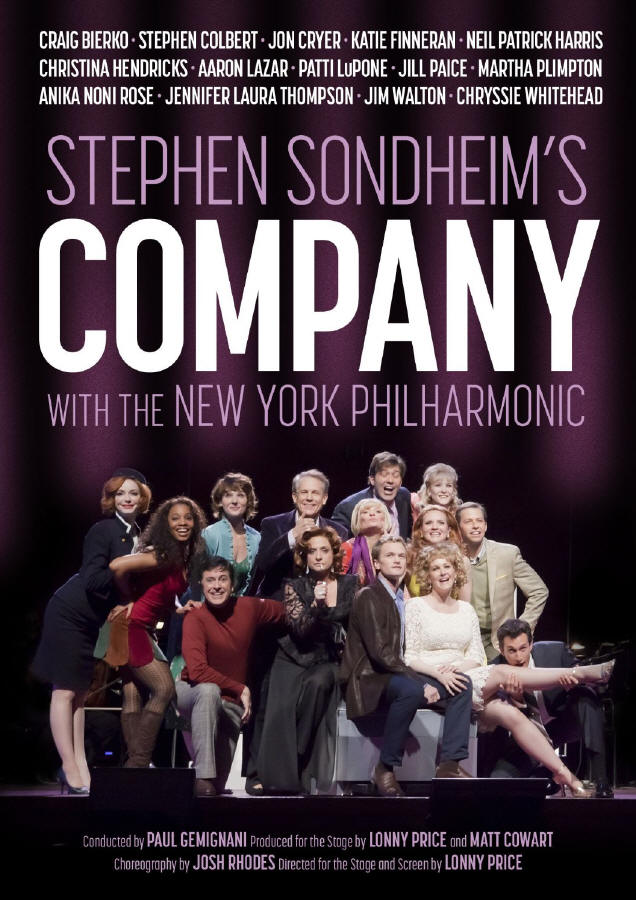
Company -- There is a bootleg video floating around out there of the 1993 Company reunion concert with the entire original cast (minus "Larry" who had died), and it's truly amazing to get a taste of that history-making, rule-shattering musical, as close to the original production as we'll ever get. As part of that concert, they also did the birthday party scenes, and also all of Micheal Bennett's original choreography -- which is brilliant. Unfortunately, that video is not available commercially. (Yes, I am a tease.) But there is one commercial video that is arguably just as good. I'm talking about the 2011 "concert staging" starring Neil Patrick Harris, Patti LuPone, Stephen Colbert, Martha Plimpton, Jon Cryer, Craig Bierko, et al. (This is not that godawful 2006 production where the actors play their own musical instruments. Someone please lock John Doyle up for a while.) This 2011 production is technically just a concert, but it's so much more than that. They have minimalist furniture and they do all the dialogue scenes -- in some ways, it's almost exactly what the original Broadway production looked like. This concert staging could have moved to Broadway as easily as the Chicago revival did. And it would have been better. The style here is exactly right, they get the wry humor, they get the subtlety, they get the edge of it. And every actor is dream-casting for that character. Company has always been one of my all-time favorite shows. Almost everything I do today is built on the shoulders of Sondheim and Prince. If you've never seen Company, this is it.

Passing Strange -- This is one of the most brilliant, most original, most thrilling pieces of theatre to hit Broadway in a decade. And we're very lucky that Spike Lee fell in love with it and decided to film it before it closed. So now we have a really great record of this masterpiece of modern musical theatre. It's everything I love, it very much points the way toward the future of the art form, the score is utterly amazing, and every artist will find a great deal of resonance in this story. It was one of the great thrills of my life to work on this show with New Line last fall. If you only watch one of the shows on this list, make it Passing Strange.

The Pirates of Penzance -- Once again, the movie version of The Pirates of Penzance was such a huge disappointment. I had ssen the original 1981 cast on Broadway -- my first Broadway show ever -- and the movie sucked every drop of joy, rowdiness, and anarchy out of it. But now, the stage production is on DVD, filmed when it was still at the outdoor Delacorte Theatre in Central Park before moving to Broadway. If you've never seen -- or never liked -- Gilbert and Sullivan, give this one a try. It's absolutely pitch-perfect, exactly what G&S should be for a modern audience. And it literally changed the way I think about musical theatre. The rowdiness of it, the chaos of it, the sexuality, the physical humor, the genuine honesty and outrageous style all rolled up together. I think it's the most fun I'd ever had in a theatre up to that point. It opened up this whole new world of what a musical could be. So much of how I stage a musical comedy I learned in that one night on Broadway in spring 1981.

Pippin -- I first saw Pippin on Showtime, also in 1981, and fell madly in love with it. Now, all these years later, knowing so much more about the original production of Pippin, this version disappoints me a little bit. This was a Canadian reproduction of the original, with some of the original cast, restaged by Bob Fosse's dance captain Kathryn Doby. Without Fosse at the helm, Ben Vereen goes a bit too over-the-top, but this is pretty damn close to what the original was like. Personally, I hate the rewrites that Stephen Schwartz has done to the show recently, so it's good that the show was preserved in this video, more or less in its original form (though missing a couple songs). It's a remarkable piece of theatre created by a genuine genius at the height of his powers. And Stephen Schwartz's score is much stronger than the critics originally gave it credit for. If you haven't seen it, give it a shot.

Sweeney Todd -- Again, this was my first encounter with Sweeney Todd and it thrilled me. Since then, I've seen a bootleg video of the original production and I do prefer Len Cariou to George Hearn in the title role, but Hearn is still excellent if a little less subtle. But this is a solid production, with some of the original cast, including Angela Lansbury. As I understand it, this was the end of the national tour, in L.A. I wish some of the replacement cast were better actors, but it's an amazing show, so even in a B+ production, it's really powerful. And now that it's on DVD, they've solved a lot of the sound problems.

Kiss Me, Kate -- I never really liked Kiss Me, Kate. It always seemed so old-fashioned and bland. Then I saw the revival with Brian Stokes Mitchell and Marin Mazzie, which was really outstanding, and I softened a bit. Then I saw the 1958 TV production, just recently released on DVD, with the two original Broadway leads, Alfred Drake and Patricia Morison. And it completely changed my opinion about the show. This is a dark, nasty, brutal, very funny, but decidedly adult take on the show. Is this what the original production was like? Probably so. And it's a lot more interesting, a lot more fun, and a lot more cynical than any other Kate I've seen. So call me a convert.

Alice at the Palace - I stumbled upon this DVD on Netflix and was naturally curious -- a musical I had never heard of...???  This is a very different, more adult take on the classic story, using lots of stage devices borrowed (as many shows at the time were doing) from the experimental theatre movement, with Meryl Streep as Alice, and a great ensemble cast including Debbie Allen, Michael Jeter, and Mark Linn-Baker, and a score by Elizabeth Swados. It's not brilliant by any means, but it's really interesting and really fun. And if you're as big a musical theatre freak like me, you know you wanna see it now...

Barnum -- I saw the original production of this show on the same New York trip in 1981 that I saw Pirates for the first time. And it thrilled me almost as much. Once again, here's an incredibly original, emotional, smart piece of theatre, with a great score by Cy Coleman and the brilliant Michael Stewart, and a solid book by Mark Bramble, telling the life story of PT Barnum in the language of the circus. Don't worry -- it's not at all cute. I wish the original cast (Jim Dale, Glenn Close) had been preserved rather than this London production with Michael Crawford. But it's still a great way to see this amazing, original show.

Tintypes -- I first saw this show on cable in 1981, around the same time I first saw Pirates of Penzance and Pippin. It's a gentle little show, not really the kind of show you'd guess that I would like. But I really love it. It's a cast of just five actors (including future director Jerry Zaks), on a mostly bare stage, singing songs from the early decades of the 20th century, like "The Yankee Doodle Boy," "In My Merry Oldsmobile," "Hello Ma Baby," "Meet Me in St. Louis," "You're a Grand Old Flag," and others. In a way, the show is a character study of America in that moment, the immigrant experience, "melting pot" assimilation, the first World War. On one level, it's a revue, but like all the best revues, it's also much more. As simple and old-fashioned as it seems at first, it's a powerful portrait of our country at that moment, and the cast is flawless, both in singing and in acting. This is a fascinating, original, insightful piece of theatre, and once again, we're really lucky it's been preserved on video. I re-watch this show every couple years because it's a terrific lesson in saying a lot without saying a lot. So much of the dramatic content is subtextual, and that raises it up above most other revues.

Poe -- This one may not be everyone's cup of tea, but I LOVE IT. It's a very minimally staged pop/rock song cycle chronicling the life and career of Edgar Allen Poe, truly one of the most original shows I've seen in a long time. I first watched this earlier this year and absolutely fell in love with it. The music and lyrics are by the late Eric Woolfson, one of the creative forces behind the Alan Parsons Project, and this production was staged in London's famed Abbey Road Studio.

The Sondheim Musicals -- I'll group these all together -- Sunday in the Park with George, Into the Woods, and Passion. It's so wonderful that several of the greatest works of one of the art form's greatest geniuses have been preserved for us. We're just lucky that technology advanced just enough, just in time, to capture his greatest works. I'll always wish they had captured the original casts of Company and Follies, but it's hard to complain when we have the shows we do have. I fully believe that we are in a new Golden Age of Musical Theatre, and I'm pretty eager to discard Rodgers & Hammerstein at this point, but there's no denying that none of the amazing things happening in our art form today would be happening without the work of Sondheim (and Prince and Lapine). We stand on the shoulders of giants.

And in the interest of equal time, I should at least mention the Andrew Lloyd Webber shows that are on video -- in very good productions -- Jesus Christ Superstar, Cats, and Joseph and the Technicolor Dreamcoat.

Now they just need to start releasing all those hundreds of musicals they have in the Theatre on Film and Tape Collection at the New York Public Library. But until they do, you can always stop in there when you're in New York and watch some incredibly cool stuff...

So there's my list. If there are any here you haven't seen, give 'em a try. Every one of these videos has something to recommend it, and it's a great way to get a better glimpse into the history of our art form. Like I said, I hated Kiss Me, Kate until I saw the original leads and I realized the show itself was never the problem -- the productions of the show were. (I had the same experience with Show Boat.) Even for those of us who do this for a living, it's often hard to tell that the material's good when the production is bad. Just look at the reception High Fidelity and Cry-Baby got in New York -- we know now (thanks to New Line) that both shows are exceptionally well crafted but were distorted and ruined by clueless New York directors and designers. Now both shows are getting their due in regional theatres across the country -- again, thanks to New Line.

We're happy to help.

On a related topic, New Line's YouTube channel has collected more than 250 videos chronicling the entire history of the American musical theatre, from a historical recreation of the 1904 Little Johnny Jones right up to today's new works, including hundreds of original performances and original choreography. It's so cool that today's technology allows us to do this. So stop by. I think you'll have a blast watching this stuff and the other cool videos we've collected.

And if you're looking for even more musical theatre to fill up the dark, cold winter ahead, take a look at my lists of cool movie musicals, cool stage musicals, and cool musical theatre books. That'll keep you busy for a while...

Long Live the Musical!
Scott

Magic in the Making

I love reading musical theatre behind-the-scenes books and biographies. I'm in the middle of two really good books right now, Show Boat, Performing Race in an American Musical and Hard Times: The Adult Musical in 1970s New York City. I also love reading the novels that musicals are based on, to see how the adapters responded to the source material. I always want to better understand the great (even the merely good) works of our art form and also the influences that shape the artists whose work I love, how they work, what they value, because I think it gives me invaluable insight into their work.

Not long ago, I wrote a blog post listing ten really cool movie musicals I think everyone should see. I also wrote a post about how the movie musical has changed in recent years, in parallel to changes in the stage musical. Even though my first love is stage musicals, we can learn a lot -- and have a great time -- watching film musicals too.

So a fun idea occurred to me, to ask a few of the musical theatre artists I know what their favorite movie musicals are -- really with no idea if those picks would reveal anything of interest or just be fun to read. But even if only on a gut level, I figured I could learn something. And if nothing else, I'd have a great list of movies to watch for the next several weeks...

So anyway, here's what my quickie research turned up...

Damon Intrabartolo -- Jesus Christ Superstar, Evita, West Side Story, Hedwig and the Angry Inch, and Little Shop of Horrors

Jason Robert Brown -- Singin' in the Rain, Silk Stockings, Top Hat, Swing Time, and Easter Parade

Andrew Lippa -- West Side Story, The Wizard of Oz, The Government Inspector, Chicago, and Beauty and the Beast

John McDaniel -- Chicago, Funny Girl, Moulin Rouge, The Sound of Music, and Little Shop of Horrors

Stephen Gregory Smith -- All That Jazz, Chicago, Reefer Madness, Hedwig and the Angry Inch, and Sweeney Todd

Jeff Calhoun -- Top Hat, The Wizard of Oz, Singin’ in the Rain, A Star Is Born, Hedwig and the Angry Inch, and Moulin Rouge

Michael Friedman -- Swing Time, Meet Me in St Louis, Nashville, French CanCan, and 8 Mile, with honorable mentions for the classics Love Me Tonight, The Bandwagon, The Merry Widow, and Gentlemen Prefer Blondes

Kyle Jarrow -- The Sound of Music, Hole, Dancer in the Dark, The Happiness of the Katakuris, and Moulin Rouge

Read into all this what you will. I notice a lot more older movies than I expected. I also notice there's only one film that gets more than two votes from this group, which is Hedwig. I guess if I had to pick my own Top Five, they'd be Absolute Beginners, 1776, Grease, Rocky Horror, and Moulin Rouge, with honorable mentions for The Music Man, All That Jazz, Nine, and Robin and the 7 Hoods.

If you're a longtime reader of this blog, you already know that I'm incapable of making a Top Five list that includes only five items. If it were a Top Ten list, no doubt I'd list twelve.

Is there a point to all this? I think so. Long ago, I read an interview with Michael Bennett, and he was talking about how much he borrows from film techniques in his staging. That really struck me, and I've learned over time how to create effective stage versions of pans, close-ups, over-the-shoulder shots, dissolves, split-screens, focus-pulls, dolly zooms, etc. The stage is different from film in that the audience chooses where to look. But if the staging is good (and the lighting!), it will almost force the audience to look at a particular spot -- almost like film.

Once I learned that film techniques can be translated to the stage, I really started studying how my favorite filmmakers work, directors like Woody Allen, Federico Fellini, Robert Altman, Spike Lee, Martin Scorsese, Paul Thomas Anderson, and more and more lately, David Lynch. I've learned so much from their work. And now I often find myself using cinematic terms when I'm blocking a show, telling the actors that we're doing a split-screen or a slow pan or a two shot.

There's so much I can learn as a director of stage musicals from films, from non-musical plays, and pretty much every other form of artistic expression. I'm in favor of musical theatre artists learning everything they can about our art form, about all the great works, about all the great artists, but we should never forget to explore outside our art form too. There's lots of treasure out there that will make our work better.

And though I do finally feel comfortable now as a stage director, I will never stop learning more. I hope.

Long Live the (Movie) Musical!
Scott