Dramatical Cats

(An excerpt from my new book Rescuing Cats: The Musical That's Better Than You Think)

I’m a musical theatre snob.

I admit it. I just don’t enjoy a mediocre, conventional musical anymore – or even worse, a mindlessly conventional production of a rich, complex, unconventional musical. But I’m no knee-jerk snob. It’s just that I love what’s amazing. And truthfully, there’s a lot of it.

While it’s true that many of Andrew Lloyd Webber’s later shows are not my cup o’ tea, I honestly think that Jesus Christ Superstar is a brilliant, audacious piece of musical storytelling that is too often treated like a shallow church pageant. (Spoiler Alert: It’s not.) And I think that Evita is a masterwork, in fact, much richer, more nuanced than Hal Prince’s original production and Patti LuPone’s original performance led us to believe (as much as I revere Hal Prince and La LuPone). Evita is a dark, morally complex, seductively charming, double love story; it’s not a Brechtian horror show about an ice queen.

And I will also admit I love Joseph and the Amazing Technicolor Dreamcoat. No, it’s not a masterwork. But let’s be honest, it’s relentlessly clever, endearingly smartass, and it’s chock full of catchy songs. Hating on Joseph is like hating on Hello, Dolly! And while we’re here, I’ll also admit I really love Song and Dance. The first half of that show, the one-act Tell Me on a Sunday is a serious, complicated character study of a deeply damaged woman who has no self-awareness; that’s tricky to dramatize, but the show really works. And the music for the second half of Song and Dance, Lloyd Webber’s “Variations” for cello, is one of my favorite pieces of instrumental music. It’s so inventive, so playful, and it does what Lloyd Webber does best, straddling confidently the worlds and vocabularies of classical music, pop, jazz, and theatre music.

And then there’s Cats.

It seems so easy to make fun of it, parody it, “pee on it,” so to speak. Everybody seems to love it or hate it, and both positions often seem irrational to me. (Then again, how someone responds to a piece of art is subjective, right?) Maybe it’s the strangely intense vitriol, the passionate, enraged loathing of this musical, that all seems so weird to me. It’s like people are mad at the whole idea of the show, which again is baffling. It’s just a musical, after all. No one is claiming it’s the next Dianetics.

I first encountered the show through the Broadway cast recording (on LP!), right after it was released, and I fell in love with the score. The lyrics revealed more depth and more comic ambiguity each time I listened to them – and more humanity – in their wonderful mashup of real cat behavior mixed with hilariously real human personalities. I’ve never understood why some people hate Cats so fiercely.

Not long ago, I got the idea to write a book of poems modeled on Eliot’s cat poems; but while Eliot lovingly satirized human behavior through the comic lens of cat behavior, my book, Theatre Cats: The Old Producer’s Book of Dramatical Cats, lovingly satirizes the behavior of theatre people, through the lens of some unusually artsy cats. Writing these pieces was fun for me on several levels, and it gave me a much deeper appreciation for everything Eliot did in those original poems. I also wrote a short story, “Night of the Festival,” for my Weird Fiction anthology, Night of the Living Show Tunes, in which the narrator wakes up at the Jellicle Ball transformed into a cat, and he slowly loses his humanity as he becomes part of the ritual. Again, it was a fun project that got me thinking about the musical in new ways.

John Rockwell wrote about Lloyd Webber in The New York Times in 1987, “Depending upon your source, the following passionately held opinions will be proffered at the mere mention of his name: He is the savior and regenerator of the very genre of the musical. He is the pioneer of the rock musical. He is a barely disguised opera composer. More than anyone, he has tipped the musical's creative locus from New York to London. He is the instigator of the current penchant for glitzy spectacle on Broadway. He is a composer of melodic genius and telling theatrical savvy. He is a cheap panderer to the lowest common denominator, derivative and faceless.”

Many critics predicted the only real appeal of Cats would be the spectacle, the show-bizzy glitz and eye candy. But that’s simply not true. People don’t go to the theatre for eye candy; they go for connection. Through these poems, T.S. Eliot created this crazy, vaguely familiar universe that is both our human world and a secret cat world at the same time, occupying the same space, living with all the same moral ambiguities. These characters and their stories all exist in this fantastical double-reality. And part of the “running joke” (if I can apply that term to T.S. Eliot) is our unavoidable awareness that while this isn’t our Real World, it sure reveals our Real World – and us – to us.

But it wasn’t just Eliot’s text that grabbed me. Andrew Lloyd Webber’s music for Cats is so playful, and in real ways reflects both the sly, satirical humor of Eliot’s text and also a fully alternate cat world, where musical styles leap from one to another, songs gets interrupted, melodies cavort, and rhythms behave as erratically as cats.

The wild 13/8 time signature of “Skimbleshanks” (breathlessly counted 1-2-3, 1-2-3, 1-2-3, 1-2, 1-2) gives us a palpable sense of movement, energy, busyness, painting a rich aural portrait of Skimbleshanks’ workplace. In a similar manner, the constantly shifting, irregular time signatures of “Memory” echo Grizabella’s scattered, broken thoughts. There are examples like this throughout the Cats score. We already knew that Lloyd Webber has an extraordinary gift for melody, but the bonus here is the beautiful melodies even in the instrumental music, not just the usual reworkings of the vocal melody, but often entirely new themes, as in “The Gumbie Cat” dance break.

Rockwell wrote in that same New York Times article, “What Lloyd Webber achieved was the expansion of the musical-theater composer's resources to include rock, at a time when most American writers for the musical theater continued to resist it. Born into the rock era, he was, along with Tim Rice, a true pop fan, and found it both natural and necessary to use rock music in a theatrical context.” He went on, “It was Cats that was Lloyd Webber's real declaration of independence from Rice – the partnership had dissolved after Evita, the victim of a mounting friction of egos – as well as his first project to make him real money. It is the key musical in his career, the show that defined him on his own, established the very idea of a new English musical and crystallized the controversy that has swirled around him ever since.”

Some people complain that Cats doesn’t have a plot. They are wrong. It has a narrative story, with a beginning, middle, and end, centered on the choice of the cat to go to the Heaviside Layer at the end. The show even observes Aristotle’s dramatic unities, of time, place, and action.

Though most of the time theatre tells us linear narrative stories – that’s what we’re used to – theatre is also about ritual. And while Cats does tell us a linear story, it’s even more about the sacred ritual behind that story. T.S. Eliot famously wrote in a review in 1923, “All art emulates the condition of ritual. That is what it comes from and to that it must return for nourishment.” Eliot always felt a strong obligation to tradition, to culture and heritage, and ritual was always a part of that. Significantly, throughout history and still today most religious services closely resemble theatre performances, both in the physical space (with “stage” and “audience”) and in the structure of the content.

But almost everyone has misunderstood Cats from the start, trying to cram it into preexisting categories and conventions and styles. Cats is musical theatre as ritual. It’s not a revue. It’s not a song cycle.
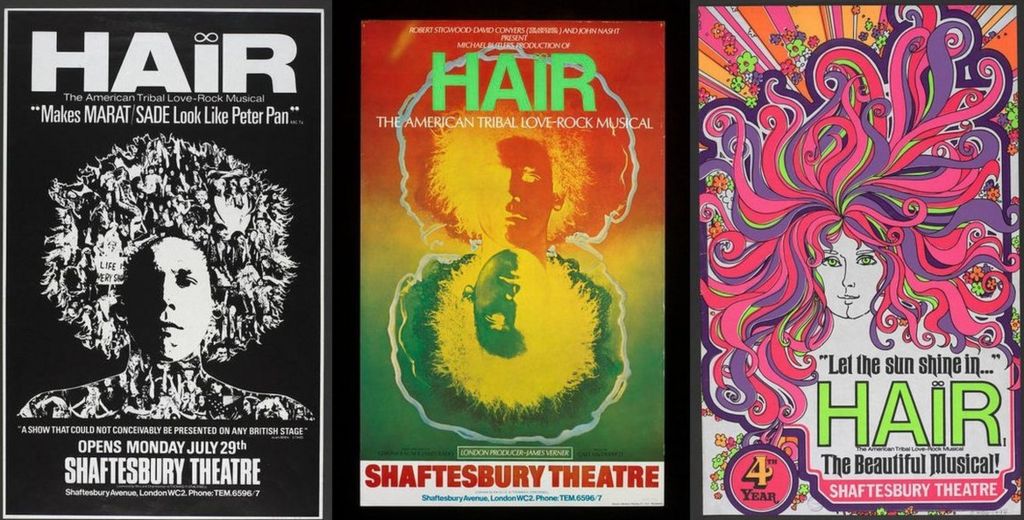
Cats is very much like Hair. Yet the critics and the musical theatre snobs forever yammer on about how it’s all production design and no plot, or has only “a thin plot.” The truth is that just like Hair has a linear dramatic throughline, so does Cats. Just as any ritual does. Hair, Celebration, and Godspell all experimented with ritual as musical theatre, all three in different ways, and later, The Gospel at Colonus did too. And that’s what Cats is, a ritual, beginning with the summoning and gathering of the tribe. This community of individuals isn’t here to tell us a story this time; they’re here to remind themselves – and us – who we are.

One of the things that drew me to Cats was that I knew these personality types – the clueless snob, the bully, the rock and roll rebel, the passive-aggressive control freak, the shit disturbers, the faded beauty. Eliot’s great stunt was illuminating with loving insight some truths about human behavior, through the shockingly sharp lens of observed cat behavior. But that was only half his trick. The other half was allowing us to see, to our delight, where the two intertwine and overlap.

I love this show. Here’s why.

Long Live the Musical!
Scott

To buy your New Line season tickets for next season, click here.

To donate to New Line Theatre, click here.

To check out my newest musical theatre books, including my latest, He Never Did Anything Twice: Deconstructing Stephen Sondheim and Rescuing Catsclick here.


The Theatre's Certainly Not What It Was

Is the theatre dying?

Yes and No. 

Theatre as we've practiced it for thousands of years is not dying. Theatre as its practiced today in the United States (and elsewhere) might be. It looks like big commercial theatre -- in other words, Broadway -- must either die or evolve.

Nationally, theatre attendance is down 20-30% since the pandemic. That's a lot!

My personal bet is that Broadway will become less and less theatre, and more and more theme park. Just look at Back to the Future, Chitty Chitty Bang Bang, Beetlejuice, Spider Man: Turn Off the Dark, and others. Some of these shows are returning to the Ziegfeld model -- lots of eye candy, just a dollop of content.

And let's remember, theatre has been called The Fabulous Invalid for almost a century. Wikipedia tells us:
The Fabulous Invalid is a 1938 stage play by George S. Kaufman and Moss Hart following the oscillating fortunes of a fictitious Broadway theater, the Alexandria, in the period between 1900 and 1930. The play's title has since entered the vernacular as a synonym for the theater.

Or as Tom Stoppard puts it in Shakespeare in Love:
Henslowe: Mr. Fennyman, allow me to explain about the theatre business. The natural condition is one of insurmountable obstacles on the road to imminent disaster.

Fennyman: So what do we do?

Henslowe: Nothing. Strangely enough, it all turns out well.

Fennyman: How?

Henslowe: I don't know. It's a mystery.

It's a joke but it's also a terrible truth. It really is a mystery most of the time, and that makes long-term planning -- any planning, really -- very difficult. And the nature of this beast is that those obstacles and that disaster are more or less continuous and seemingly random.

As as example, New Line has had financial trouble now and then over the years, but we've always found our way back to stability. In one of my life's greatest ironies, in March 2020, we had finally managed to get New Line in a really stable place financially. We had no debt, the shows ahead were guaranteed sellers (Head Over Heels and Urinetown), and we were planning a killer 2020-2021 season, opening with Something Rotten! New Line was going to be on solid ground again for a long time to come.

And then the Plague hit and all the theatres got shut down.
Eerily like Shakespeare in Love.

Since New Line returned to the stage in fall 2021, it has been a real struggle. Our audiences are slowly returning to their previous levels, but slowly. Of the first four shows we produced after the pandemic, all four had to cancel some performances because of Covid. We were determined to pay everyone their full amount anyway, even though we lost audience revenue; but that put New Line back into financial struggle.

Meanwhile, every day now there's another item in the news about a regional theatre canceling a show, cancelling a season, or in many cases, shutting down for good. It's terrifying. New Line will soon open its 32nd season; and in June 2025 we'll produce our 100th show. We hope. The possibility that New Line could be forced to shut down -- especially over money -- just seems so depressing.

It feels like we reputedly take two steps forward, and then one step back.

Luckily, the New Line donors have been extremely generous through this whole ordeal, and still now as we struggle to come back.

The other good news is that, as commentators and pundits discuss the current state of the American theatre, two things are true. First, more new musicals are being produced across the country than ever before in history; and there is a young and growing fan base for musicals, like never before. Second, the model that most experts suggest for regional theatres to adopt is pretty much the same model New Line is built on. So it seems we're in better shape than some to weather this storm.

But that doesn't mean it's easy.

And my personal opinion, especially after studying and writing about theatre for so long, is that American theatre will not die; but it will become something else. The 1990s brought us a revolution in the art form, as quirkier, more personal, more artistic musicals finally had a place to find an audience in the New Regional Theatre movement. And New Line was born right in the middle of that movement. Miranda Lundskaer-Nielsen writes in her outstanding book Directors and the New Musical Drama:
After the pioneering efforts of theatres such as the Public Theater and Playwrights Horizons in New York, the idea of the serious nonprofit musical spread to theatres across America during the 1990s. While these shows met with varying levels of economic and critical success, the very existence of this alternative home for the art form began to redefine the musical, offering an alternative to both the traditional Broadway musical and the new West End shows. As the economics of the commercial theatre became increasingly forbidding, the nonprofit theatre became vital incubators for musical drama and nurtured a new generation of musical theatre writers.

Maybe the 2020s will be another revolution in American theatre, ignited by the necessities of the pandemic. Maybe we'll return to the basics, as we have periodically in the past. Designer Robert Edmond Jones wrote in his brilliant book, The Dramatic Imagination:
The only theatre worth saving, the only theatre worth having, is a theatre motion pictures cannot touch. When we succeed in eliminating from it every trace of the photographic attitude of mind, when we succeed in making a production that is the exact antithesis of a motion picture, a production that is everything a motion picture is not and nothing a motion picture is, the old lost magic will return once more. The realistic theatre, we may remember, is less than a hundred years old. But the theatre – great theatre, world theatre – is far older than that, so many centuries older that by comparison it makes our little candid-camera theatre seem like something that was thought up only the day before yesterday.

In 1973, producer-director Joseph Papp wrote about The New York Shakespeare Festival in the New York Times:
Our artistic style is defined in every production on our stages: forthrightness, vigor, and the direct search for the meaning of man in his family and in society are the common characteristics. It is the social conscience of this theatre which distinguishes it from other theatres. We constantly reflect, and react to, the shifting societal scene and attempt to articulate this shift in terms of theatre workers, plays, and audiences. Our long-range artistic plans, therefore, evolve from a recognition of the need for humanity, intelligence, and feeling in a fast changing world. We will address ourselves to these needs in the year ahead and welcome the thrill of that challenge.

He easily could have been writing about New Line in the 21st century. Even further back in 1962, Broadway composer Jerry Bock (Fiddler on the Roof, Fiorello!, She Loves Me) predicted something which is only now finally happening:
Shortly it will happen. The American musical will shed its present polished state and become an untidy, adventurous something else. Shortly it will exchange its current neatness and professional grooming for a less manicured appearance, for a more peculiar profile. It will swell beyond or shrink from the finesse that regulates it now. It will poke around. It will hunt for. It will wander and wonder. It will try and trip. But at least it will be moving again, off the treadmill, out of the safety zone, crossing not at the green, but in between...

Bock went on:
The new musical may not take place between 41st and 54th street east or west of Broadway. That is, not at first. It may start in San Francisco or Chicago or Minneapolis. Or Lincoln Center. It may come from London or Paris or Rome or Johannesburg. Or the Village. It will probably be viewed and noted with greater interest. We will be less provincial about protecting the American-Broadway-musical-image. We will eliminate the high tariff against vigorous ideas not coming from The Street. We will join the common market of the theatrical world. Our eyes will stray, our ears will sharpen. And what we see and hear from everywhere will prepare us, will help us make our own new statement. Broadway may become one of many alternatives. It may, along with the musical, change its spots. And we may desert it now and then in search of something else. It won’t mesmerize as much. Nor will it strangle. Its monopoly days are numbered. Nothing more exciting in the theatre will happen than this new musical.

That's nothing to be afraid of, as long as we remember that commercial theatre is an historical anomaly. Storytelling is an essential basic need of humans. Commercializing it -- monetizing it -- is literally a perversion of nature. Humans are evolved to communicate nearly everything through storytelling, so to make access to storytelling dependent on disposable wealth is arguably an abomination.

The reason theatres like New Line are legally "nonprofit" and exempt from taxation, is because we as a society believe that storytelling is as vital to a community's well-being as education and healthcare. The reason people send us donations is because they believe that what we do is essential and they are investing in their community. If our ticket prices covered the actual expenses of our shows, they'd cost $70-80 each. The structure of our nonprofit status allows for donations and grants to subsidize that ticket price so that we can charge a lot less.

Otherwise, our audience would be priced out, or we'd have to pay our artists nothing. And we don't pay anyone particularly well even in flush times!

Even more good news. Most of the theatres that are shutting down (though not all!) are huge organizations with huge staffs, huge overhead, huge production costs, dozens of union contracts, and often, a physical theatre to maintain and operate. New Line is largely free from all that, in part thanks to the Kranzberg Arts Foundation, who built us an artistic home in the Marcelle.

Thankfully, in the grand scheme of things, New Line is pretty small. While some theatres have multi-million dollar budgets, our annual budget in normal times is about $120.000, even less these days. And during our last "normal" season, about 80% of our budget went directly to producing shows. Our minimal overhead costs are part of what lets us survive through all this.

After all, it ain't over till the big-boned lady sings.

Or to paraphrase The Unsinkable Molly Brown, we ain't down yet!

On the other hand, we ain't exactly up either. The Gods of the Theatre have smiled on us; though I wish they'd smile a bit bigger...

As we have for thirty years, we depend on you. New Line belongs to you. To subscribe to our awesome coming season, click here. To make a generous donation, click here. And meanwhile, help us spread the word!

Thank you, St. Louis. We've made it this far. We ain't down yet. You need us and we need you!

Long Live the Musical! And the Theatre!
Scott

P. S. To check out my newest musical theatre books, including my latest, He Never Did Anything Twice: Deconstructing Stephen Sondheim; and Rescuing Cats: The Musical That's Better Than You Thinkclick here.