Bacon and Chicken

Part of the crazy fun of Something Rotten! is the dozens of Shakespeare references. It's a very funny show even if you know nothing about Shakespeare, but it's extra funny if you do know about him. So with that in mind, I thought it would be a good idea to create a Something Rotten! glossary, for our actors and our audiences.

And then I realized how many references there are in this script and score, so I'm starting with just the opening song, "Welcome to the Renaissance."

RENAISSANCE is French for "rebirth," as Something Rotten! tells us at the end of the opening number. Apparently, scholars disagree a bit, but this period started roughly in the 15th century and lasted through the 16th century. It was a time of returning to the ideals of Classical Greece and Rome, of massive advances in art, literature, music, architecture, politics, science, and lots more. And Shakespeare was writing his plays in the late 1500s and early 1600s, almost as a sort of culmination of everything the Renaissance brought us.

SOMETHING ROTTEN! is an incredibly clever, multi-layered title (the best ones always are) that references both Hamlet and also, Nick and Thomas' clumsy misreading of Hamlet as Omelette. The original quote, "Something is rotten in the state of Denmark," is a line from Hamlet, as Marcellus and Horatio discuss two disturbing things: the ghost of Hamlet's father appearing at night, and also the moral ambiguity of Hamlet's uncle sitting on the throne and all the intrigue behind that. But when Nick and Thomas mistake the title for Omelette, the quote takes on two more meanings, the "rottenness" of the idea to write a musical about omelettes, and the various unpleasant schemes unfolding, most notably Nick trying to cheat and steal using Thomas' dubious powers. As I wrote about in my last post, it creates multiple meta-theatrical layers. 

WAR OF THE ROSES refers to a series of civil wars in England in the later 1400s, fought between the Lancasters and the Yorks over who gets to inherit the crown. At the beginning of Shakespeare's play Richard III, Richard tells us briefly of his family's victory and the resulting boredom for him. Richard opens the play with this speech:
Now is the winter of our discontent
Made glorious summer by this sun of York;

The "winter of our discontent" is the War of the Roses, and the "glorious summer" is the Yorks' victory. Then Richard makes a pun. The word "sun" refers to the metaphorical summer that has come, and it also is heard by the audience as "this son of York," because he is part of the House of York. Then he talks about how much everything has changed, and the bad times dispelled. 
And all the clouds that lour'd upon our house
In the deep bosom of the ocean buried.
Now are our brows bound with victorious wreaths;
Our bruised arms hung up for monuments;
Our stern alarums changed to merry meetings,
Our dreadful marches to delightful measures.
Grim-visaged war hath smooth'd his wrinkled front;
And now, instead of mounting barbed steeds
To fright the souls of fearful adversaries,
He capers nimbly in a lady's chamber
To the lascivious pleasing of a lute.

Now instead of war, the new peacetime pastime is sex, "capering" (fooling around) in "a lady's chamber" (her bedroom), to sexy music. But that's a problem for Richard, because he's a hunchback and nobody wants to fool around with him.
But I, that am not shaped for sportive tricks,
Nor made to court an amorous looking-glass;
I, that am rudely stamp'd, and want love's majesty
To strut before a wanton ambling nymph;
I, that am curtail'd of this fair proportion,
Cheated of feature by dissembling nature,
Deformed, unfinish'd, sent before my time
Into this breathing world, scarce half made up,
And that so lamely and unfashionable
That dogs bark at me as I halt by them;
Why, I, in this weak piping time of peace,
Have no delight to pass away the time,
Unless to spy my shadow in the sun
And descant on mine own deformity:

Wow, this guy is pissed, at life, at himself, at everybody else. So he decides if nobody will fuck him, he's going to fuck over everybody else.
And therefore, since I cannot prove a lover,
To entertain these fair well-spoken days,
I am determined to prove a villain
And hate the idle pleasures of these days.
Plots have I laid, inductions dangerous,
By drunken prophecies, libels and dreams,
To set my brother Clarence and the king
In deadly hate the one against the other:
And if King Edward be as true and just
As I am subtle, false and treacherous,
This day should Clarence closely be mew'd up,
About a prophecy, which says that 'G'
Of Edward's heirs the murderer shall be.

Richard is the Earl of Gloucester, so the prophecy he mentions predicts he will kill his brother Clarence. And as soon as he says it out loud, Clarence shows up.
Dive, thoughts, down to my soul: here
Clarence comes.

Such a great opening to a play! But there's some interesting resonance here between angry Richard and angry Nick, and Nick does some dirty deeds as well, though he stops short of murder.

CHAUCER
was a very famous writer, author of The Canterbury Tales, among other things, and he is often referred to as the Father of English Literature or the Father of English Poetry. He was also a respected philosopher and astronomer, and he scares the shit out of Eulalie Mackecknie Shinn!

THE CRUSADES were a series of religious wars initiated, supported, and directed by the Catholic Church in the medieval period. The best known of these Crusades are those to the Holy Land in the period between 1095 and 1291 that were intended to recover Jerusalem and its surrounding area from Islamic rule. Beginning with the First Crusade, which resulted in the recovery of Jerusalem in 1099, dozens of Crusades were fought, providing a focal point of European history for centuries. Later on, the Crusades arguably led to The Tribunal of the Holy Office of the Inquisition, which was at its peak powers of terror about a century before Shakespeare.

BUBONIC PLAGUE, also known as The Black Death, is a terrible disease spread by fleas and small infected mammals. It was the most lethal pandemic in world history, lasting about ten years in the mid-1300s, killing up to 200 million people, and it's still with us today. The estimates are that the Black Death killed 30-60% of the population in Europe, and about a third of the population of the Middle East. It was known as The Black Death because one of the symptoms was acral necrosis, a dark discoloration of the skin.

CHARLEMAGNE, French for "Charles the Great," was the first emporer of the Holy Roman Empire, uniting Europe after the fall of the Roman Empire. Charles was son of Pepin the Short, and two of his sons were named Louis the Pious and Pepin the Hunchback. Intrigue, plots to bring disaster...

LUTE is a stringed instrument, close to a guitar or mandolin, and it was the lead instrument for most Renaissance music.

THE HOUSE OF TUDOR was one of the royal bloodlines in England, and Henry VII took over the throne after the War of the Roses, because the House of Lancaster had no more male heirs. Henry then married into the House of York. The style of architecture during this period became known as Tudor as well.

FARTHINGALE is just a Renaissance version of the structure under a hoop skirt.

THOMAS DEKKER was a dramatist, a pamphleteer, and a versatile and prolific writer. His career spanned several decades and brought him into contact with many of the period's most famous dramatists.

FRANCIS BACON
was a gay English philosopher and statesman who served as Attorney General and as Lord Chancellor of England. He was a contemporary of Shakespeare's. His works are seen as contributing to the scientific method and remained influential through the later stages of the scientific revolution. Bacon has been called the father of empiricism. He argued for the possibility of scientific knowledge based only upon inductive reasoning and careful observation of events in nature.

Bacon's philosophy is laid out in the many writings he left behind, His scientific works described his ideas for a universal reform of knowledge into scientific methodology. His religious and literary works laid out his moral philosophy and theological meditations. His juridical writings laid out Bacon's proposals for reforms in English Law.

In "Welcome to the Renaissance," one actor sings, "Hey Look, it's Francis Bacon with a chicken." Another sings, "What's he makin'?" And the first one replies, "Well, I think he found a way of freezing meat." It's true. And it's a weird story. Bacon had theorized that fresh meat could be kept fresh by freezing it. To prove his theory, he stuffed a chicken with snow, packed snow around it, and buried it. And he caught pneumonia and died.

SIR WATER RALEIGH was an English statesman, soldier, writer, explorer, and a favorite of Queen Elizabeth I. He played a leading part in English colonization of North America (and the introduction of tobacco as a cash crop), he helped suppress rebellion in Ireland, and he helped defend England against the Spanish Armada.

JOHN WEBSTER was the last of the great Elizabethan playwrights, known particularly for his extremely gory tragic plays. Webster as a child shows up in the film Shakespeare in Love, as a comically bloodthirsty street kid who loves the uber-gore of Shakespeare play Titus Andronicus, and not incidentally he enjoys feeding live mice to cats. That's all fictional, but it's a great way to establish the ultra violence of his future plays.

BEN JONSON was considered the second greatest English playwright, after our boy Will. He was famous for his satirical comedies.

CHRISTOPHER "KIT" MARLOWE was a gay atheist (neither acceptable at the time) and an incredibly famous and successful playwright, considered now to be the greatest Elizabethan playwright until Shakespeare took over the title after Marlowe's mysterious early death. He also makes an appearance in Shakespeare in Love. One of Marlowe's biggest hits was Tamburlaine the Great.

THOMAS KYD was another of the important Elizabethan playwrights (there were a lot!) and his most famous work is The Spanish Tragedy.

THOMAS MIDDLETON was unusual among his peers for writing comedies, tragedies, and histories, all three.

THOMAS MORE was an English lawyer, judge, social philosopher, author, statesman, and humanist. He opposed the Protestant Reformation and the Church of England. He was a mentor and advisor to Henry VIII, who executed him for not taking the Supremacy Oath, which said that the King is the head of the Church of England. He's also a major character in the cable drama The Tudors.

Later in the show, at the after-party, Nigel and Portia see one more celebrity writer of the time...

EDMUND SPENCER is considered one of the greatest poets in the English language. He's best known for The Faerie Queene, an epic fantasy poem and allegory celebrating the Tudor dynasty and Elizabeth I.

This opening song of Something Rotten!, "Welcome to the Renaissance," does so much important narrative work, like all the best opening numbers do. It sets up time and place, the establishing situation, and it subtly sets up the central conflict to come. It also sets up the ironic meta-device of essentially setting the story in 1595 and 2022.

But it also does a masterful job of reminding us what a wild and wonderful time this was in many ways. So much happening, so much changing, so many advances in art and science. The list of authors in this song is stunning, as we realize that all these amazing writers all lived about the same time.

It makes me think of the musical theatre here in America, in the late 1960s and early 1970s, when we had so many amazing artists working at the same time in the same place, Stephen Sondheim, Hal Prince, Jerry Robbins, Bob Fosse, Michael Bennett, Kander and Ebb, Harnick and Bock, Jerry Herman, Stephen Schwartz, Tim Rice and Andrew Lloyd Webber... you get the idea.

This list also suggests to us that the competition in London's theatre scene is fierce! So many masterful playwrights giving the public very high quality work, makes it hard for a marginally talented new voice like Bottom's to get noticed. Even worse for poor Nick, he realizes that Nigel is also a much better writer than he is.

So much of what's to come in our story is here in this seemingly goofy, seemingly traditional, musical comedy opening. The lyrics even sneak in the fact that the printing press was making literature available to the middle class for the first time. But it's done comically, as the lyric keeps demanding rhymes for renaissance. The ensemble sings:
Our printing press has the fancy fonts.
That's right, we're fancy,
And very literary, theatrical, too.
It's what we do.

Something Rotten! is a neo musical comedy like Bat Boy, Urinetown, Cry-Baby, and others, so wacky and transgressive on the surface, that we don't notice the substance and craft underneath. It's such a joy to work on material this smart, this insightful, and this human. I love my job.

Long Live the Musical!
Scott

P.S. Season tickets are on sale now, and single tickets will go on sale at the end of the month. For more info about the show, click here.

P.P.S. To check out my newest musical theatre books, click here.

To Thine Own Self

Beneath all the mega-meta-wackery of Something Rotten!, the writers have constructed a perfect Hero Myth story, and Nick Bottom goes on a classic Hero's Journey, though it's an interior journey here. All the elements of the Hero Myth are present, though some of those elements are wickedly fucked up.

Nick is the hero of our story, but he's actually an anti-hero, a protagonist who possesses no heroic qualities, like J. Pierpont Finch (How to Succeed). Capt. Macheath (Threepenny Opera), Gordon Schwinn (A New Brain), Harold Hill (The Music Man), Billy Bigelow (Carousel), Bonnie and Clyde, Sweeney Todd, and lots of others.

In keeping with the classic structure, Nick sets out to find enlightenment, but in this case he seeks enlightenment for the wrong reason, only so it will deliver him commercial success; he's really just chasing cash. Nick begins his journey, with his companions, Bea and Nigel, and then Nick meets his Wise Wizard figure, Thomas Nostradamus, though in this case Thomas is a deeply, deliciously flawed Wise Wizard, and so the wisdom he passes along is just as flawed.

Arguably, Shakespeare is Nick's Evil Wizard, pointing Nick the wrong way over and over; and as with many Hero Myths (like Star Wars, for example), when our Hero battles the Evil Wizard, he's really fighting himself. Maybe Thomas is Nick's accidental Evil Wizard, since he gives so much bad information that causes Nick so many problems.

Like every Hero must, Nick has to conquer many obstacles along the way -- including terrible advice from his own Wise Wizard -- in order to finally attain not the enlightenment he seeks, but instead the enlightenment he needs. Nick's greatest obstacle throughout his journey is his own misplaced values, and his inability, over and over, to recognize he's on the wrong road.

Or is it the right road? Is this just the journey Nick needs right now?

There are plenty of conflicts on the surface of this story, but the real conflict at the heart of everything is that Nick has lost the path in his Hero's Journey. Each of us has our own path to follow, our own individual bliss to find, our own Real. But Nick is chasing other people's Real, not his own. He's trying to write what others' want, what others write, rather than what inspires him. But he can't find his Real down somebody else's road.

Nigel's gorgeous song, "To Thine Own Self Be True," speaks to this acting troupe and their creation of theatre, but it also speaks to Nick's journey. He's trying to be Shakespeare, and he has to learn to be Nick. Nigel finds new enlightenment as he navigates all the chaos, but Nick is a half dozen steps behind.

Ultimately, we realize that Thomas Nostradamus isn't the Wise Wizard figure, after all, though he certainly appears like he is. Nick's real Wise Wizard is Nigel. Throughout the show, Nigel repeatedly urges Nick to write about the two of them, but Nick dismisses the idea as boring.

And yet.

Like Passing StrangeSomething Rotten! is built on a meta-theatrical self-referential time loop worthy of the original Planet of the Apes movies. At the end of  the story, Nick, Nigel, and the gang head for America to introduce the New World to Musical Comedy. Which we know will eventually grow and evolve over time, through George M. Cohan and Cole Porter and Stephen Sondheim, et al., until some 21st-century artists create a brilliant, mobius strip of a musical like Something Rotten!

Which, by the way, is the musical Nigel keeps pitching -- the story of the Bottom brothers! This show we're watching, Something Rotten! is also the show they're trying to write, and by the end of the show, the show we think they will write. As a musical. About two brothers writing the first musical.

Something Rotten! is its own father. Or great-grandfather, or something. The whole thing is sooooo meta.

The brilliant musical Passing Strange follows a very similar artistic strange loop. In both shows, the protagonists can be real dicks, but it's because both of them are lost, and they both have to find their own paths to find their enlightenment.

Something Rotten! just swims in references, not only to Shakespeare and to musicals, but to us. After all, a Hero's Journey is just a metaphor for a human life. We can all be lazy, thoughtless, stubborn, and we all make terrible mistakes. The trick is to keep evolving, navigate the obstacles, and follow your bliss. And to realize we all stumble along the way, some of us more spectacularly than others.

As we continue to work, we're finding that Something Rotten! is incredibly funny, as we expected, and it's also so much more than that! This isn't a show about jokes or sight gags; it's a show about someone struggling to find their path. Haven't we all been there?

Long Live the Musical!
Scott

P.S. Season tickets are on sale now, and single tickets will go on sale at the end of the month. For more info about the show, click here.

P.P.S. To check out my newest musical theatre books, click here.
SOMETHING ROTTEN!

For the last few years, people have asked me if New Line would ever produce Something Rotten!, and they've always been surprised when I immediately replied, "Oh Hell, Yes!" We originally planned to produce it in fall 2020, but that was not to be. So last night, we finally went into rehearsal for this wonderful, incredibly funny musical.

Sometimes, people tend to think that because New Line produces only smart, socially and politically relevant, adult musical theatre, that we don't do comedy. But we do a lot of comedy. As Aristophanes well knew, it's much easier to deal with serious issues through comedy. It's the "Spoonful of Sugar" theory.

And though Something Rotten! is outrageously wacky, it deals with one of the most important issues in our society in the twenty-first century -- what is success? I was so grateful to Michelle Obama for coming out during their White House years and saying directly that making money is not the only measure of success. And that's exactly the lesson our protagonist Nick Bottom has to learn in Something Rotten!

This show is all about defining commercial success, personal success, and artistic success -- and realizing that they are not all the same thing. It's the central conflict between our fictional brothers Nick and Nigel. Nick has this lesson to learn; Nigel has already learned it.

A few years back, I got to interview the real world Kirkpatrick brothers for my Stage Grok podcast when the show first came to the Fox on tour. They are two-thirds of the Something Rotten! writing team, along with John O'Farrell. They told me the idea of the show started with a wonderful What If  that's not only funny, but unexpectedly resonant in a dozen different ways.

What if Shakespeare's London operated like today's Hollywood?

The extra insightful part of this juxtaposition is that Shakespeare's theatre scene was a commercially competitive world, and Will made his living as a writer; so mashing up these two worlds reveals so much that the two moments share, the good, the bad, and the ugly. We see that Bottom's mistakes all come from chasing that competition.

In the original production of Something Rotten!, the costumes were all Elizabethan (or Elizabethan-adjacent); but in ours, the costumes are going to suggest the present, but with references and callbacks to the Elizabethan age. If the audience is constantly reminded of this double setting of time and place, I think the mashup of these two parallel worlds will be even clearer, and as a result, funnier.

One thing I've realized about the show as we've started work -- in so many ways, it's a perfectly constructed 1950s musical comedy, but so meta. It uses the tools and devices and construction of old school musical comedy, but it also undermines all those things at the same time. It's exactly the kind of show I invented the "neo musical comedy" label for, using all those tools inherited from George M. Cohan and George Abbott, but for very different agendas, social, political, artistic, satirical, etc., and completely rejecting the silly idea of a "Fourth Wall."

Something Rotten! is a meta-musical, a show that acknowledges in various ways that it's a show, referencing not just the show's story but the actual performing of it as well. When meta-musicals are written really well, they can be amazing -- if the meta-theatre devices come out of the story. Among the best of them are Bat Boy, Urinetown, Passing Strange, Spelling Bee, Bloody Bloody Andrew Jackson, Hedwig and the Angry Inch... there are so many good ones. Among the worst are the shows whose writers think random and relentless self-reference, and intentionally bad acting, are automatically funny. You know which shows those are.

To me, the funniest and smartest thing about this very smart show is its title. Of course, it refers to the famous Hamlet quote, "There's something rotten in the state of Denmark." And that also comically describes Bottom's whole scheme -- and Shakespeare's scheme too. But it also refers to the hilariously bad musical-within-the-musical Omelette. Both Omelette and the eggs (people) that made it are arguably rotten.

But more subtly the title also describes as rotten the central conflict of the show, how Bottom defines success, his worldview that only financial success is worth pursuing, and that any means to that end are okay, which is "rotting" Bottom's soul and his relationships. And though Bottom is attempting to steal from Shakespeare, Shakespeare likewise keeps trying to steal from Nigel. It's "the system" that has poisoned Bottom (and Shakespeare). It's the same misguided mindset among young actors and writers today that only Broadway means success in the theatre.

It's also struck me that Something Rotten! is a terrific companion piece to Tom Stoppard's brilliant Rosencrantz and Guildenstern Are Dead. Both shows take minor character from another play and put them centerstage. In A Midsummer Night's Dream, we saw Bottom, Peter Quince, and their troupe rehearse and perform The Most Lamentable Comedy and Most Cruel Death of Pyramus and Thisbe. Now we find out that they didn't produce only that one play. And Bottom's got a brother who's a writer! And now they're trying to steal Hamlet, which brings us full circle to Rosencrantz and Guildenstern, the two minor characters from Hamlet, who got their own play.

The other fun part is all these very different takes on ol' Will Shakespeare, from Shakespeare in Love to the hilarious UK sitcom Upstart Crow, and now to Something Rotten! -- each portrayal gets something fundamentally right and also takes big liberties. We often see different takes on iconic characters, especially Shakespeare's characters, but it's rare that those characters are iconic writers.

And Shakespeare offers up the coolest meta device, which nobody seems to notice. An actor plays the character Shakespeare, who disguises himself as Toby, who then "plays" the role of Uncle Scar. It's dizzying.

There is a whole smorgasbord of crazy, wild, smart, transgressive, meta-theatrical stuff in Something Rotten! It's everything I could ask for in a musical. Cynical but idealistic, smartass but big-hearted, steeped in musical comedy tradition and also happily dismantling it.

1595, but also 2022.

And the cherry on top is that I love Shakespeare! So that makes all this even more fun for me. It's such a gift to work on material this audacious, this original, this inventive, and I get to do it with a cast full of very funny, very talented actors, along with our new music director Mallory Golden, and our new choreographer (and also current actor) Alyssa Wolf.

This is one of those perfect musical comedies that works best as a perpetual motion machine, no mugging, no gags, no schtick, just keep it moving! The script and score are incredibly well crafted, and we just have to follow the path they've laid out for us, and get out of the way of the brilliant comedy. The best musical comedies, like Something Rotten!, Anything Goes, Guys and Dolls, Urinetown, Bat Boy, don't need the director and actors to make them funny; they are built funny, by funnier people than us. I felt that the original Broadway production got in the way of the material too often with needless schtick. By definition, this is a comedy of words and ideas, so that's where we need to focus the audience; not on funny costumes, funny props, or funny sets.

As we've learned over the years, the more seriously we -- and the characters -- take a story like this, the funnier it will be. The higher the stakes for these characters, the more serious their desperation, the crazier and wilder the comedy gets. As the writers of Bat Boy and the Actors Gang taught us, the goal is "the depth of sincerity, the height of expression.” Honest, but Big. The canvas is bigger, the colors richer, the brushstrokes more expansive, but the image is no less true, the details no less real, the textures no less subtle. It's a wacky show, but it's also about real human emotions and relationships.

We've only had a single music rehearsal so far, but all of us can already feel how much fun and what a wild ride this will be. Stay tuned!

Long Live the Musical!
Scott

P.S. Season tickets are on sale now, and single tickets will go on sale at the end of the month. For more info about the show, click here.

P.P.S. To check out my newest musical theatre books, click here.

Go Greased Lightning!

I started writing my first book of musical theatre analysis essays in 1994, and it was published in 1996. It was just a few years after we had started New Line Theatre.

To my surprise, until I started writing these collections of essays, no one had ever written anything like this about musicals. There were a couple books already that analyzed the music of some Broadway shows, some books with plots and statistics, some books with behind-the-scenes stories, but there was nothing at the time that was a one-stop resource for directors, actors, and fans to really understand individual musicals on a deeper level.

My essays are about music, lyrics, dialogue, plot, structure and form, characters, relationships, subtext, themes, historical context (when it was written and when it's set), the intersection of the show with the rest of our culture and with musical theatre history, and lots more.

As far I know, I was the first person to study and write about musicals in this way. There had been some excellent books that analyzed non-musical plays in that deep-dive way, but nothing for musicals.

And now here I am, more than twenty-five years later, half scholar, half fanboy. Luckily for me, people seem to really love my books.

My ninth book like this has just been released, Go Greased Lightning! The Amazing Authenticity of Grease. This is only the second time I wrote a whole book about one show; the other was Let the Sun Shine In: The Genius of Hair. But both these shows deserved that treatment. Both are rich, complex, and misunderstood works of experimental theatre, from an incredibly fertile period for the art form. If you laughed when you read that last sentence, you're one of the people I wrote this book for.

Here are some snippets from my book's introduction, that explain why I decided to write it.


There are three reasons I wrote this book. The first is that I think many people -- most people? -- underestimate the intelligence and authenticity of Grease and its score, and they completely misunderstand what happens at the end of Grease. Admittedly, that’s partly because the movie dialed back the edgier aspects of the story, and inserted a new finale that made the ending less clear. But the film didn’t change the ending of the story.

For the record, Sandy does not “become a slut” to win Danny at the end of Grease. The exact opposite is true. She rejects the cultural oppression of the 1950s and her parents, and for the first time, claims her own body, her curves, and her sexuality. Though it might not be obvious, Sandy is the protagonist of Grease, and the story ends not with her submission, but with her newfound freedom and self-possession, with strength.

The second reason for this book is that Grease is about the Others, those that don’t conform to mainstream ideas of how we’re supposed to live, act, look. Here now, early in the twenty-first century, America is changing – drastically and fast – and that change is terrifying to some people, especially change this big. And as Yoda taught us, fear leads to anger, anger leads to hate, and hate leads to suffering. As in our past, those today who are fearful are in search of Others to blame. As I write this in mid-2022, America has lost its collective mind, much as we did in the 1960s. And it makes Grease unusually relevant all over again.

The third reason for the book is simply that I love Grease, and I want to share it. I’ve seen the movie more than a hundred times over the years. I saw the film five times at the theatre when it was first released in 1978. I was fourteen. I played the double-LP soundtrack so much I wore it out and had to buy a second copy.

Grease was one of four rock musicals that changed my life. The other three were a high school production of Godspell, The Rocky Horror Picture Show at midnight screenings at the Varsity Theatre, and later, a traveling student production of Hair up at college. And all within just a few years of each other. In each case I thought to myself, musicals can be THIS? Everything I thought I knew about musicals was suddenly up for grabs, in the most wonderful way. 

I was in teenage musical theatre geek heaven.

Soon after that, I did the original Grease stage show. I was a sophomore in high school, and I was asked to both music direct (for the first time!) and to play Vince Fontaine (I still know some of his monologues). And from the moment I heard that rough, rowdy, wild, original Broadway cast album, I knew that this was the real Grease, not the movie, as much as I loved it. Since then I’ve directed the show two more times, once with a community theatre group and once with my company New Line Theatre in St. Louis.

Grease is the very insightful story of America’s tumultuous crossing over from the 1950s to the 1960s, throwing over repression and tradition for freedom and adventure and a generous helping of cultural chaos, a time when the styles and culture of the disengaged and disenfranchised became overpowering symbols of teenage power and autonomy. Originally a rowdy, rebellious, vulgar, and insightful piece of alternative theatre, Grease was inspired by the rule-busting success of Hair, rejecting the happy trappings of other Broadway musicals for a more authentic, more visceral, more radical theatre experience that revealed great cultural truths about America

Just as the characters in Hair and Grease reject conformity and authority, so too do both Hair and Grease as theatre pieces. Like Hair, Grease is an anti-musical, closer to the experimental theatre pieces of New York’s off off Broadway movement in the 60s, and light years from some of the other musicals running on Broadway at the time.

So this is a book about Grease on stage, the raw, very adult rock musical that opened off, then on, Broadway in 1971 and 1972; and only secondarily about the admittedly great but shallower movie version, and the show’s other various mutant offspring. This is a book about the real Grease, in which a brunette-haired Sandy Dumbrowski once said, “Nah, fuck it,” and took Danny’s ring anyway before singing the reprise of “We Go Together.”

Many producers of revivals and tours of the show since then have tried to make this show into a cute, candy-coated teen comedy, but no matter how you dress it up, it will always be a story about teenagers trying to get laid. It’s worth taking a good look at the real thing as it was first created – a vulgar, intentionally unpolished, but culturally insightful, musically authentic, whip-smart time capsule about how rock and roll, cars, and drive-ins changed sex in America in the middle of the last century, written by two guys who were right in the middle of it all.


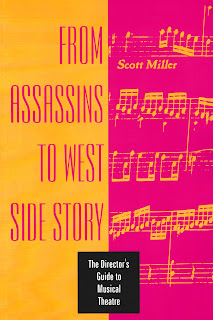
I've also written eight other books of musical theatre analysis and exploration, including From Assassins to West Side Story, 1996 (covering Assassins, Cabaret, Carousel, Company, Godspell, Gypsy, How to Succeed in Business Without Really Trying, Into the Woods, Jesus Christ Superstar, Les Misérables, Man of La Mancha, Merrily We Roll Along, My Fair Lady, Pippin, Sweeney Todd, and West Side Story); Deconstructing Harold Hill, 1999 (covering Ragtime, Camelot, Chicago, Passion, The Music Man, March of the Falsettos, Sunday in the Park with George, and The King and I); Rebels with Applause, 2001 (covering Hair, Rent, Oklahoma!, Pal Joey, Anyone Can Whistle, Floyd Collins, Jacques Brel, The Cradle Will Rock, Songs for a New World, and The Ballad of Little Mikey); Let the Sun Shine In, 2003 (covering Hair in greater depth); Sex, Drugs, Rock & Roll, and Musicals, 2011 (covering The Wild Party, Jesus Christ Superstar, The Rocky Horror Show, The Best Little Whorehouse in Texas, I Love My Wife, Bat Boy, Hedwig and the Angry Inch, and High Fidelity); Literally Anything Goes, 2019 (covering The Threepenny Opera, Anything Goes, The Nervous Set, The Fantasticks, Zorbá, Two Gentlemen Of Verona, The Robber Bridegroom, Evita, Return to the Forbidden Planet, Kiss Of The Spider Woman, A New Brain, Reefer Madness, Bukowsical, and Love Kills); Idiots, Heathers, and Squips, 2020 (covering bare, Urinetown, Sweet Smell of Success, Jerry Springer the Opera, Passing Strange, Cry-Baby, Next to Normal, Bloody Bloody Andrew Jackson, American Idiot, Heathers, and Be More Chill); and Hamilton and the New Revolution, 2021 (covering Hamilton, Dear Evan Hansen, A Strange Loop, Hadestown, The Color Purple, Bonnie & Clyde, Hands on a Hardbody, and The Scottsboro Boys).

AND COMING SOON… my tenth volume of analysis, He Never Did Anything Twice, covering all the musicals of Stephen Sondheim, who was a longtime New Line Theatre donor and an honorary member of the New Line Board until his recent death. The book includes essays on Saturday Night, A Funny Thing Happened on the Way to the Forum, Anyone Can Whistle, Evening Primrose, Company, Follies, A Little Night Music, The Frogs, Pacific Overtures, Sweeney Todd, Merrily We Roll Along, Assassins, Sunday in the Park with George, Into the Woods, and Passion. I'm hoping it will be released before the end of the year. Cross your fingers.

I also recently contributed "Afterword" commentary essays for reprints of the iconic artsy novels 42nd Street, Go Into Your Dance, and La Vie Boheme, the novel RENT is based on.

Back after the pandemic first hit, I found myself trapped in my apartment with my cats Hamilton and Macheath, and so I turned to writing books directly for the fast growing musical theatre fan base around the world. I thought about how my books and my status as fellow fanboy could serve them and help them explore our art form. Plus, it was a good way to keep my sanity and stay somewhat connected to my beloved musical theatre during those dark days.

I first released a short story anthology, Night of the Living Show Tunes: 13 Tales of the Weird. And then for something completely different, I followed that up with the new songbook, Broadway Musical Christmas Carols; and soon after, The ABC's of Broadway Musicals: A Civilian's Guide, a fun, short, easy-to-read introduction to the art form.

I've also written Strike Up the Band: A New History of Musical Theatre; and It's a Musical!: 400 Questions to Ponder, Discuss, and Fight About. And in collaboration with actor and illustrator Zachary Allen Farmer, I wrote a short book in the style of Dr. Seuss, about a high school girl and her first musical, called Shellie Shelby Shares the Spotlight; and we followed that up with the whimsical Theatre Cats.

I've always thought of myself as a director first and a writer second, especially since my writing, my books, my blog, etc., grew out of my directing work. But now, both are a big part of my life, and at least for now, I really love it.

The only thing I love more than working on and thinking about musicals, is sharing this crazy magic with people who haven't yet experienced it. I hope this growing musical theatre fan base around the world, the artists who'll be making the musicals in a generation or so, find books like these useful, to inform, to entertain, to share, as they continue on their artistic journeys beyond anything we've seen so far.

I'm just trying to do my small part, to pass on all I've learned and discovered about musical theatre. We all build on what's come before.

Long Live the Musical!
Scott